
Her på Blåvand's blog bringes korte nyheder i dagbogsformat om livet og hændelser på fuglestationen.
-
FORSIDE

- Blog
Quantity and Quality for Some
torsdag 1. oktober 2026
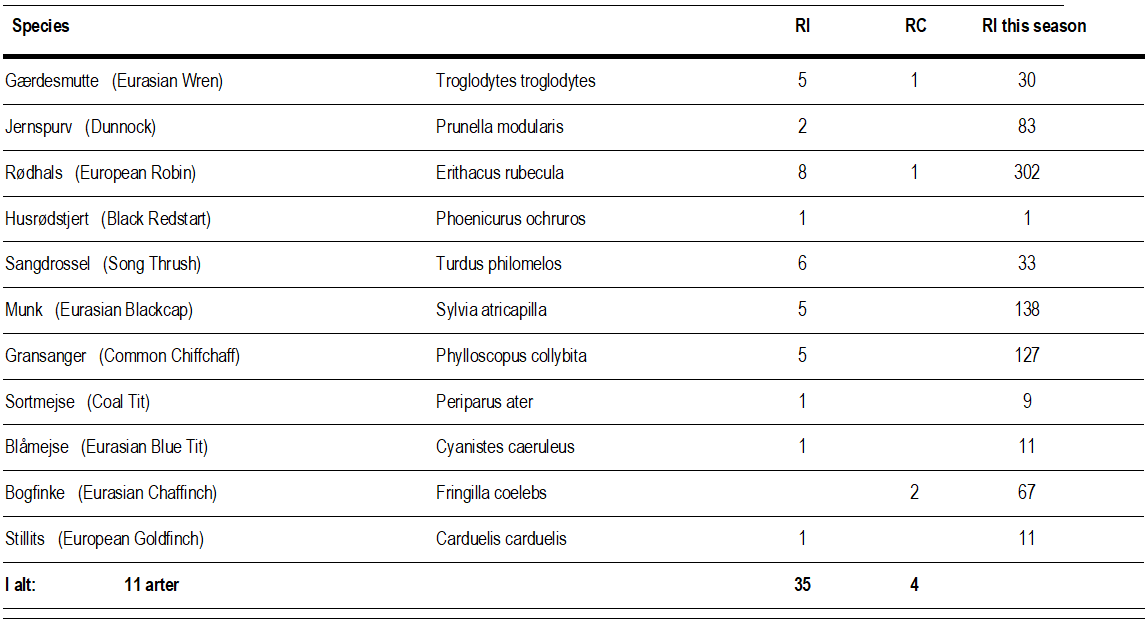
Ringing: Today I was joined by Storm in the lab, since Johan was sick. We had an okay varition of birds, including some new ringing species for Storm, and a new species in the net for the season - the Black Redstart (Husrødstjert).
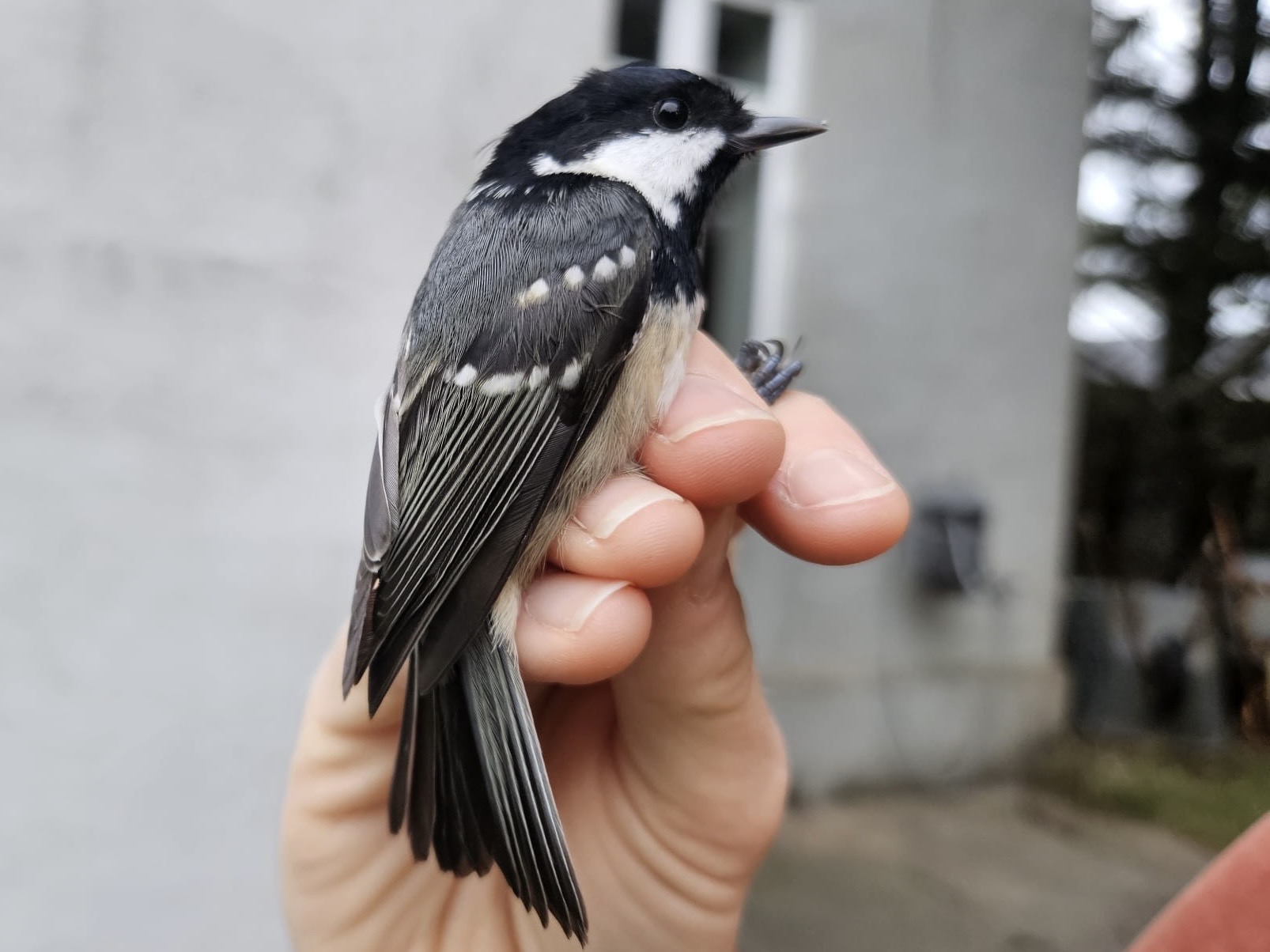 Coal Tit (Sortmejse) from today. Picture by Storm Hauris Borum.
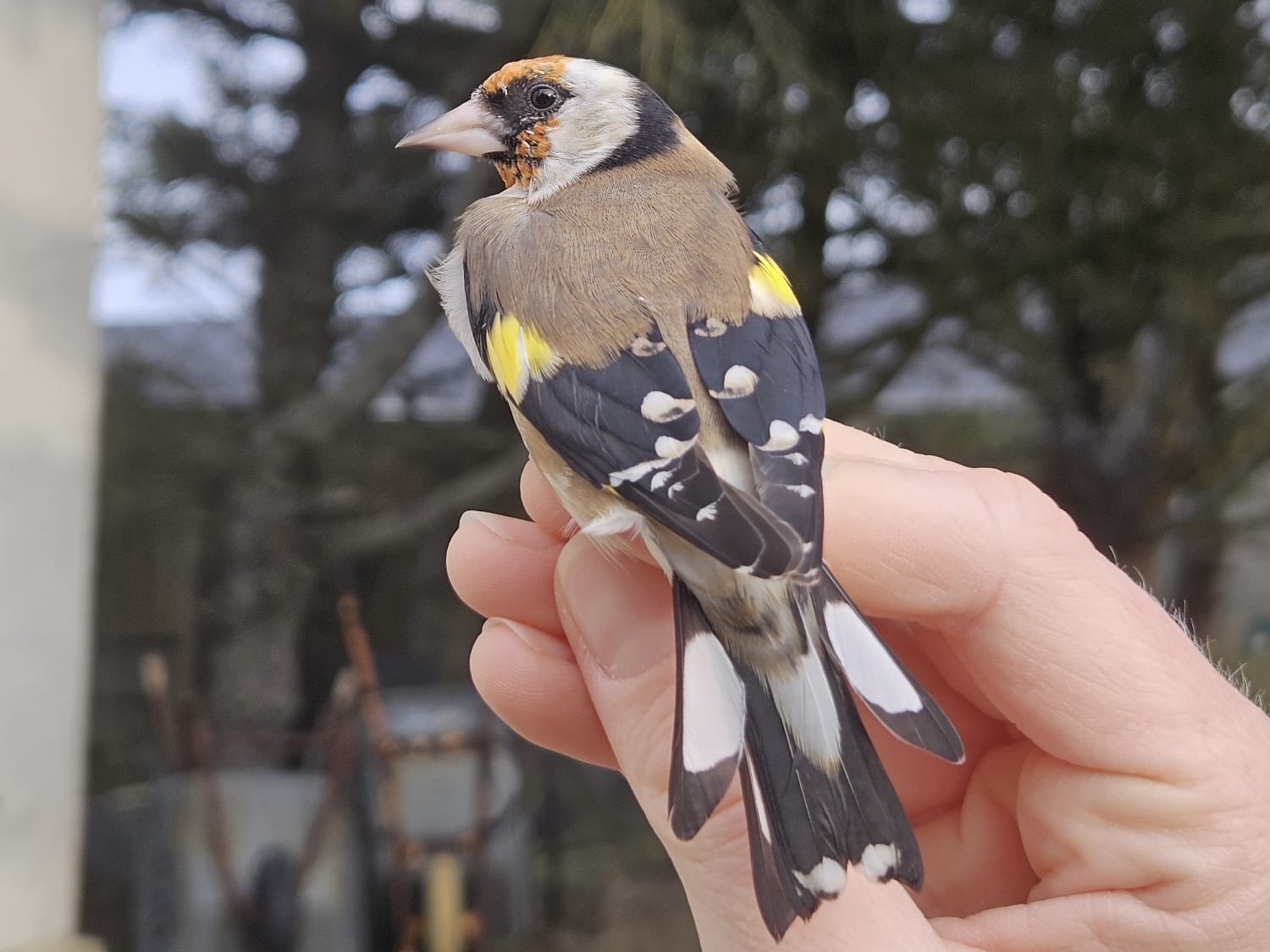 Goldfinch (Stilits) from today. Picture by Storm Hauris Borum.
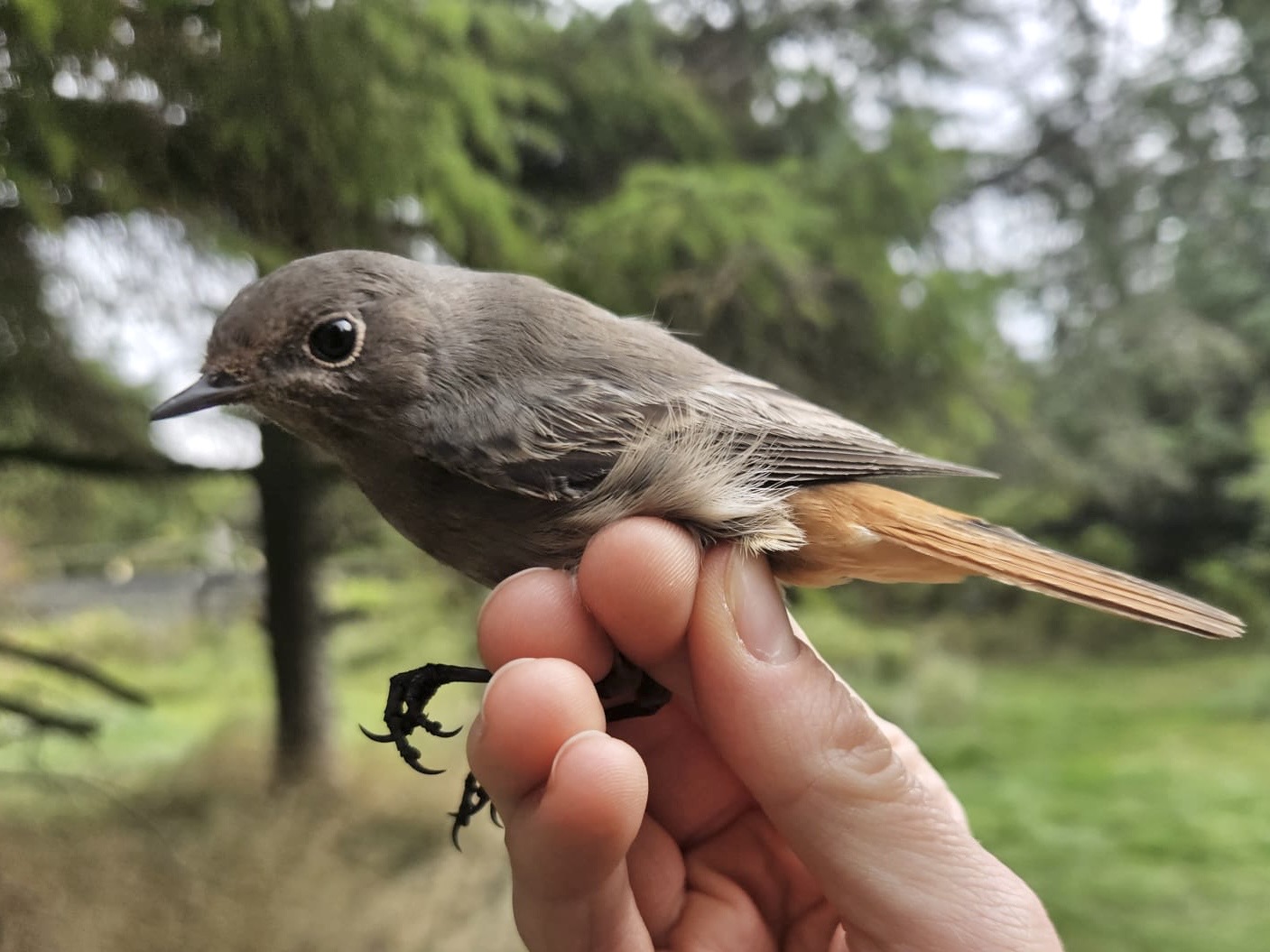 First Black Redstart of the season! Picture by Storm Hauris Borum
Today's numbers:
Observation: Holy s**t, today was (unexpectedly) amazing!
The wind has been pretty much the same the last couple of days, that being eastern and south-eastern winds. Now, eastern winds are, of course, nothing to complain about at Blåvand, as already clearly demonstrated by the huge number of passerines moving through lately. The thing is that changes in wind direction are just more exciting than constant wind from one direction, and I honestly expected that today would be decent, if slightly worse than yesterday… man, was I wrong!
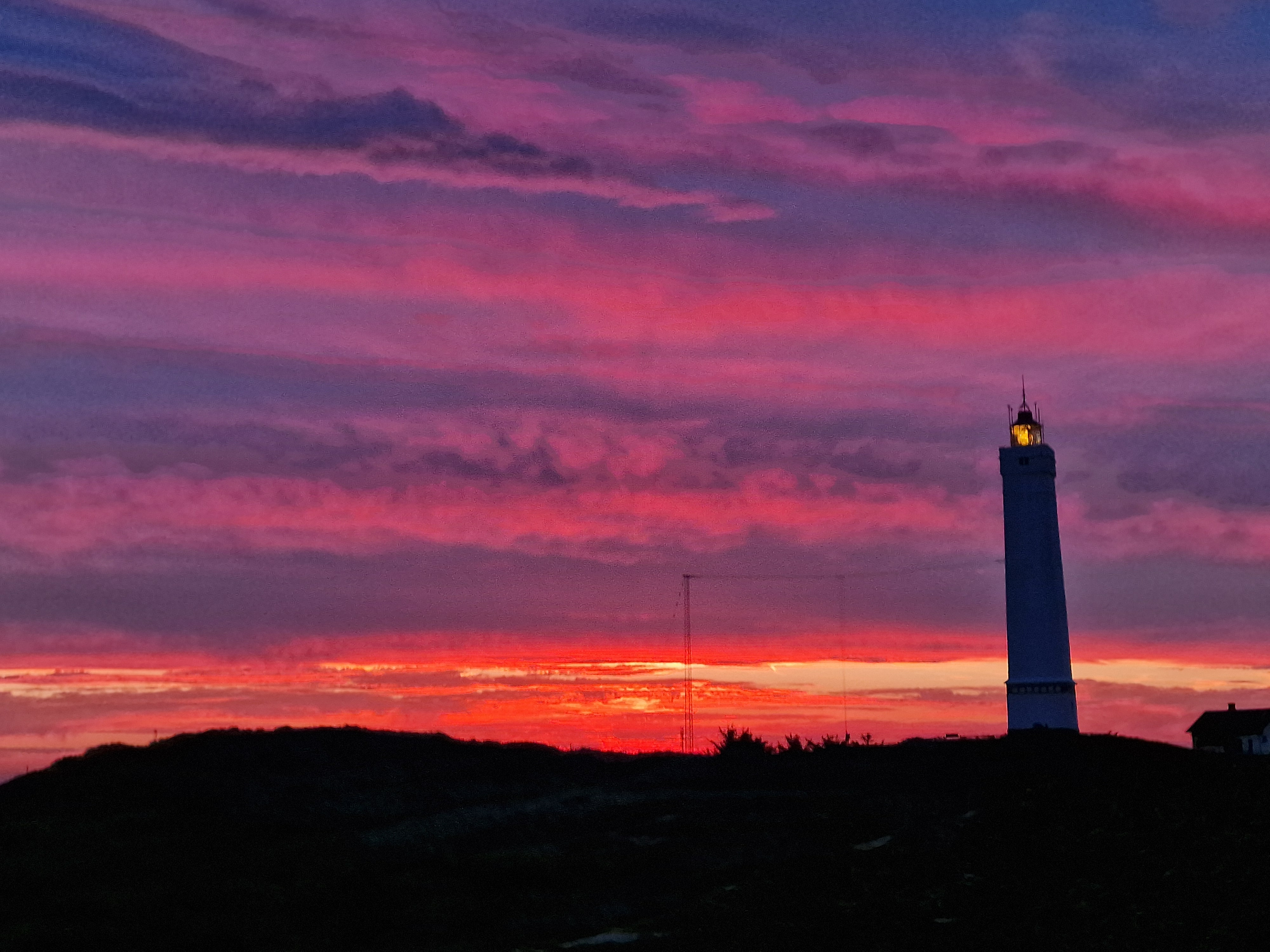
The sunrise that met me at obs today. Credit Anton Ræbild Jensen.
Today at obs, it was just Henrik and I from the station, but I wasn’t worried, as whenever Henrik is at obs, we always document way more species. The day started at 7.15 with a beautiful sunrise and a couple of Common Scoters (Melanitta nigra) and Meadow Pipits (Anthus pratensis) moving as usual. However, at 07.32, a weird Tree Pipit-like (Anthus trivialis) bird flew past me, and Henrik asked me if I heard it. Apparently, it was an Olive-backed Pipit (Anthus hodgsoni), one of my bucket-list species for Blåvand, and I was already ecstatic about today's obs! What I didn’t know at that point was that we were just getting started, as just 40 minutes later another Olive-backed Pipit went right by, this time letting me hear it very clearly before disappearing south.
And as if those two rarities weren’t enough, we also managed a Lapland Longspur (Calcarius lapponicus), two Pallid Harriers (Circus macrourus), and a Red-throated Pipit (Anthus cervinus). The Harriers gave us amazing views, and the Red-throated Pipit was especially amazing. It appeared right at eye level with a couple of Meadow Pipits and gave off two extremely clear and characteristic “PSEUI” calls so loud and sharp that they almost hurt our ears. The Red-throated Pipit is generally a difficult species to find, and this is the first in almost two years to be seen at the Huk.
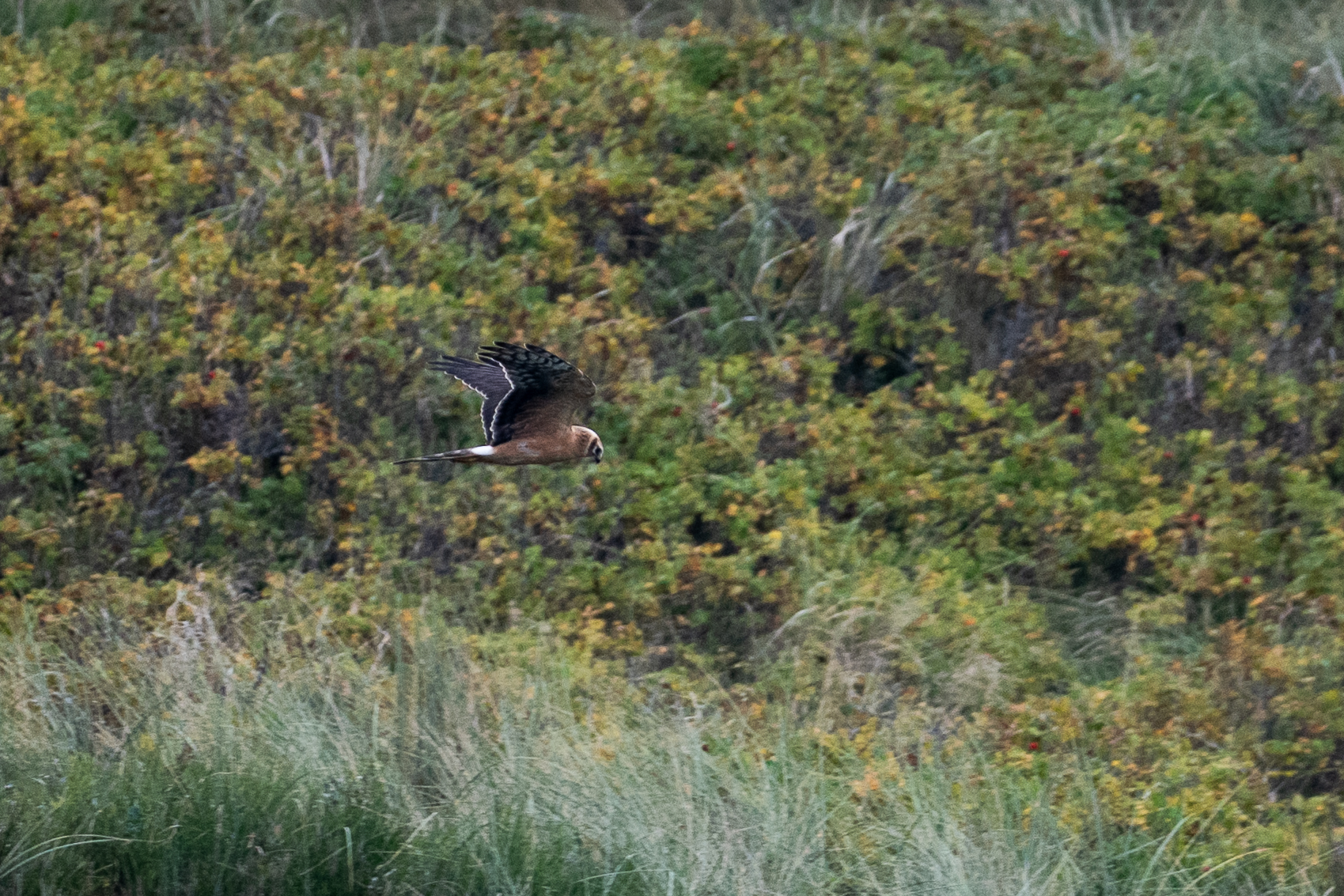
One of the Pallid Harriers giving us excellent views on fly-by. Credit Anton Ræbild Jensen.
By this point, you, the reader, might be convinced that today was all about rarities. Usually, obs is either a game of quality or quantity (sometimes neither), but today has proved that you can, apparently, have your cake and also eat it. What I mean, in short, is that while we had a sizeable amount of really good rarities today, we somehow also managed to get amazing numbers of migrating birds. The highlights include: 2380 Common Scoters, almost 7000 Chaffinces/Bramblings (Fringilla coelebs/F. montifringilla), 104 Common Snipes (Gallinago gallinago), 184 Red-throated Loons (Gavia stellata), close to 500 Greylag Geese (Anser anser), 450 Starlings (Sturnus vulgaris), and so much more!
Possibly a docu-shot of one of the Olive-backed Pipits today. Credit Anton Ræbild Jensen.
This might genuinely be one of, if not the best, days of the fall season. I will, however, keep doing my best to top today. Maybe tomorrow might have the same potential as today - we will see…
At the station: Strummer Edwards, Mathilde Sif Eiby, Anton Ræbild Jensen, Storm Hauris Borum and Johan Them Steffensen
That's a wrap on September
onsdag 30. september 2026
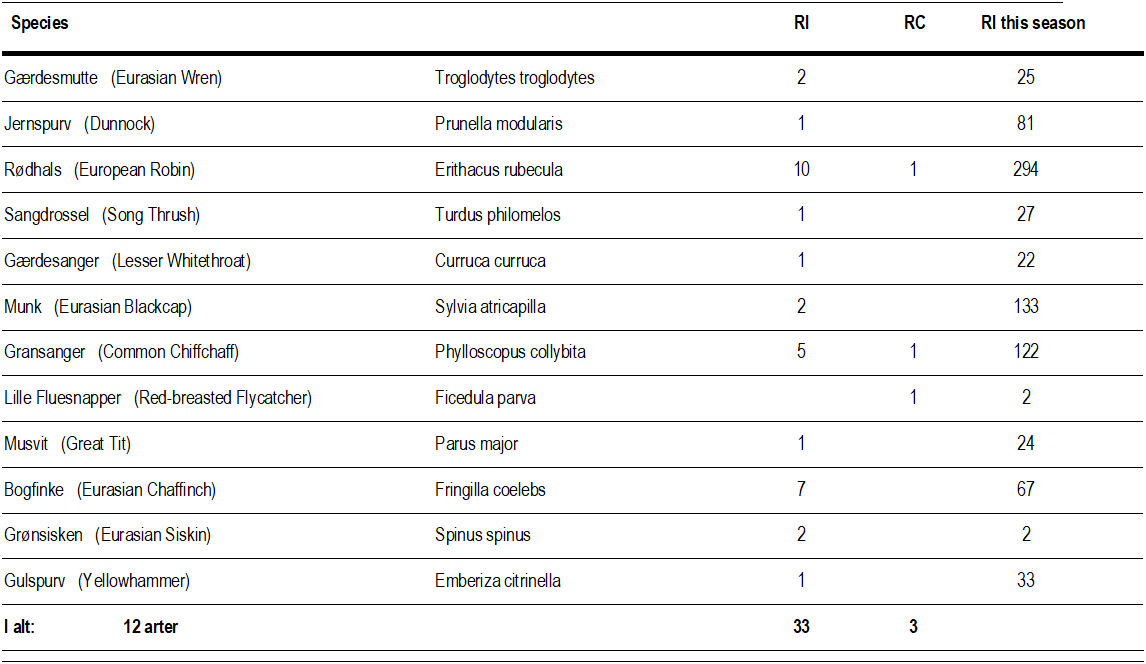
Ringing: Another day of ringing brought 36 birds of 12 different species. Most notable mentions were the Red-breasted Flycatcher (Lille Fluesnapper) from yesterday, that came back for a little recap. Other than that, I had a cute couple of Siskins (Grønsisken), a male and a female (forgot to photograph the female though).
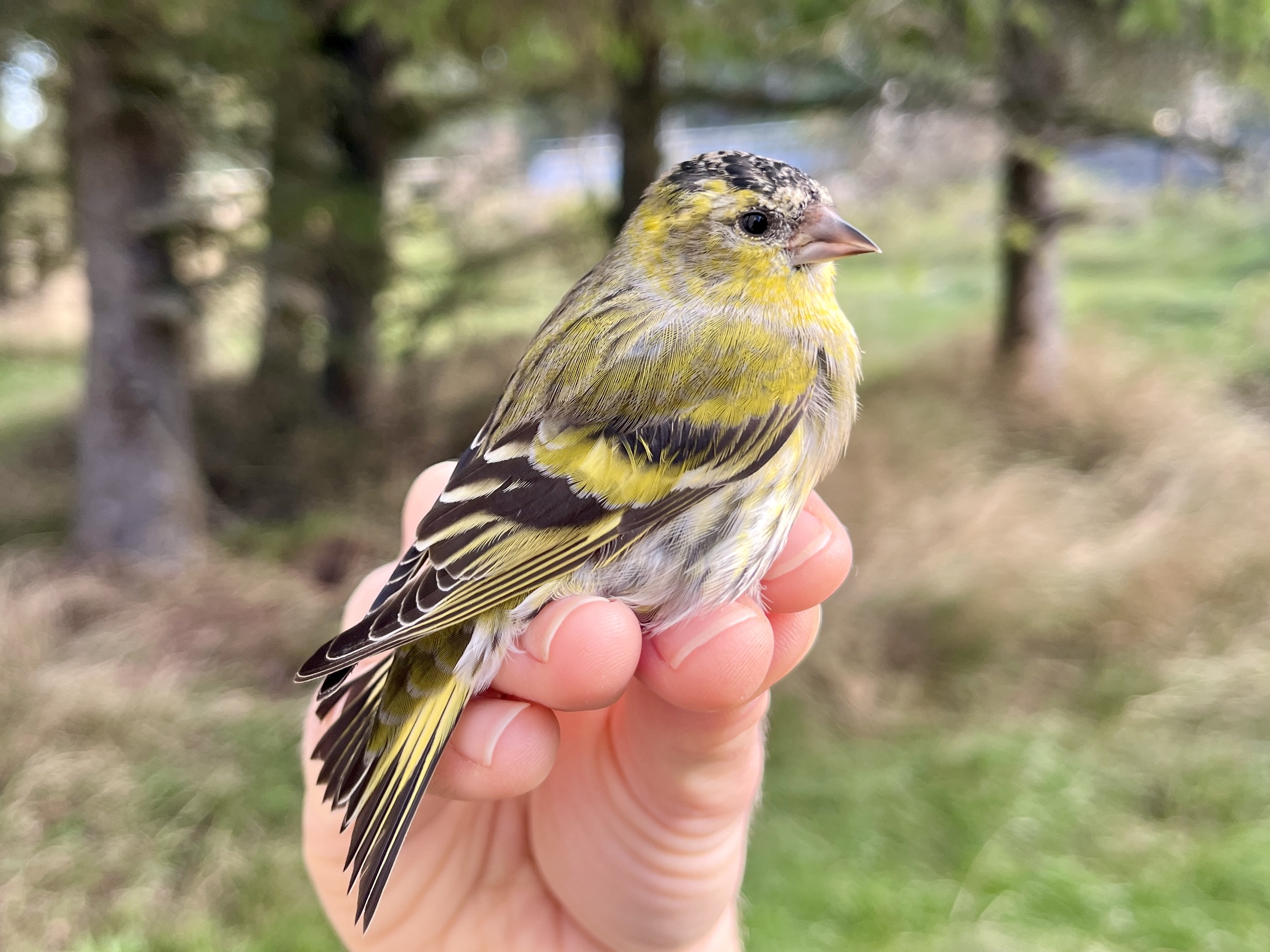 A young male Siskin, aged from some lighter / duller wing feathers in the feather group called greater coverts, and sexed from the extend of greenish yellow and the black crown feathers.
Last day of September means we can now see the cumulated monthly numbers as well. This month we managed to ring a total of 821 birds of 34 species!
- The most prevalent species was, to noone's surprise, the Robin (Rødhals) with 271 individuals, the Blackcap (Munk) with exactly 100 individuals, and the Chiffchaff (Gransanger) with 90 individuals.
- The one of a kind species have been the Tree Pipit (Skovpiber), Meadow Pipit (Engpiber), Yellow-browed Warbler (Hvidbrynet Løvsanger), Wheatear (Stenpikker), Eurasion Jay (Skovskade), House Sparrow (Gråspurv) and Reed Bunting (Rørspurv). More honorable mentions are the Ringed Plover (Stor Præstekrave) and the Red-breasted Flycatcher of which we've caught two of each.
This month we've also handled 87 recaptures of 20 species. 30 of the recaptures were Robins.
Today's numbers:
Observations: Nice clear skies greeted us on the dunes today and we were shortly treated to a lovely sunrise over the heath. However, there was little time to enjoy the view as I was glued to the scope for the first hour, counting common scoters (Melanitta nigra) migrating past in a steady flow. The peak is always in the first hours or so after sunrise, and already within that time I had counted 800.
We had a nice day for geese compared to the last couple days, with flocks og brant (Branta bernicla), barnacle geese (Branta leucopsis), and greylag geese (Anser anser). We are expecting a higher count of migrating geese throughout October, and hopefully a nice representation of species as well.
Raptor numbers were good today, at least by Blåvand standards. This is not a great place to watch migrating raptors compared to migrating sea-birds, but we still had two hen harries (Circus cyanistes), three red kites (Milvus milvus), and three white-tailed eagles (Haliaeetus albicilla), as well as a very close-flying sparrowhawk (Accipiter nisus).
While checking his photos from today, Anton discovered a surprise horned lark (Eremophila alpestris) amongst his photos of other small birds (mostly finches). Although the quality is not the best, some key characteristics are still visible: black moustacial stripe down the cheek, a white supercilium (eyebrow) and pale chin. It would have been a lifer for me, if only we had noticed when it was actually there. However, I still got a lark lifer today, when I heard a wood lark (Lullula arborea) sing for the first time!
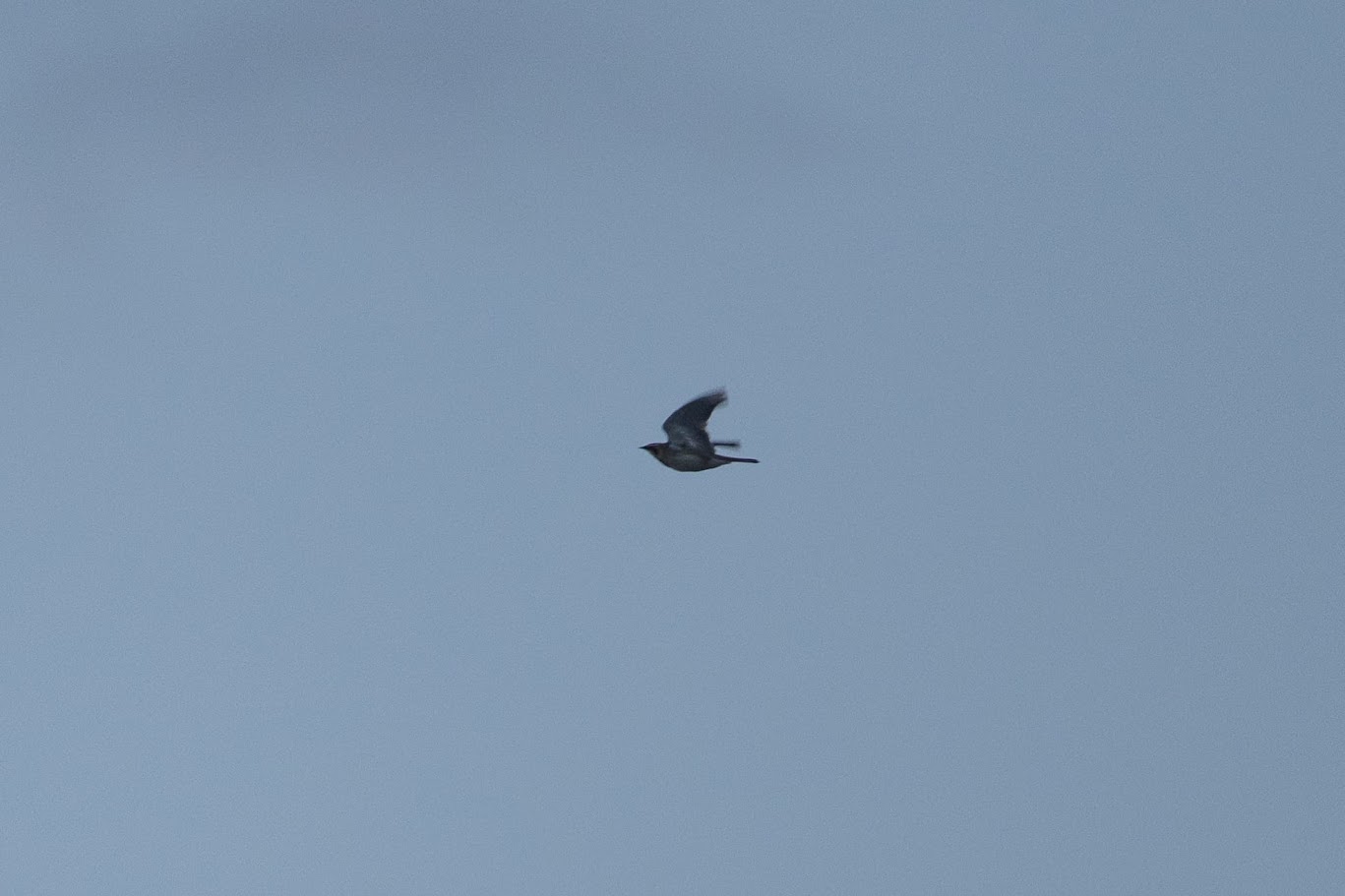 Surprise horned lark discovered amongst the small bird photos from today. Photo by Anton Ræbild Jensen.
At the station: Strummer Edwards, Mathilde Sif Eiby, Anton Ræbild Jensen, Storm Hauris Borum and Johan Them Steffensen
Divers and gannets don't mind the rain
tirsdag 29. september 2026
Ringing: A surprisingly good day of ringing today! Even though we had to close halfway through the standard in the morning due to rain, we opened up again after the rain stopped in the afternoon, and got a total of 72 birds today.
Johan got to practice some more today in both labs, since I got my new license, Strummer and I are more flexible. He also got some of the cutest and trickiest birds around - the flying meatball, the tangled mess, the escape artist, the Wren (Gærdesmutte). Kært barn har mange navne.
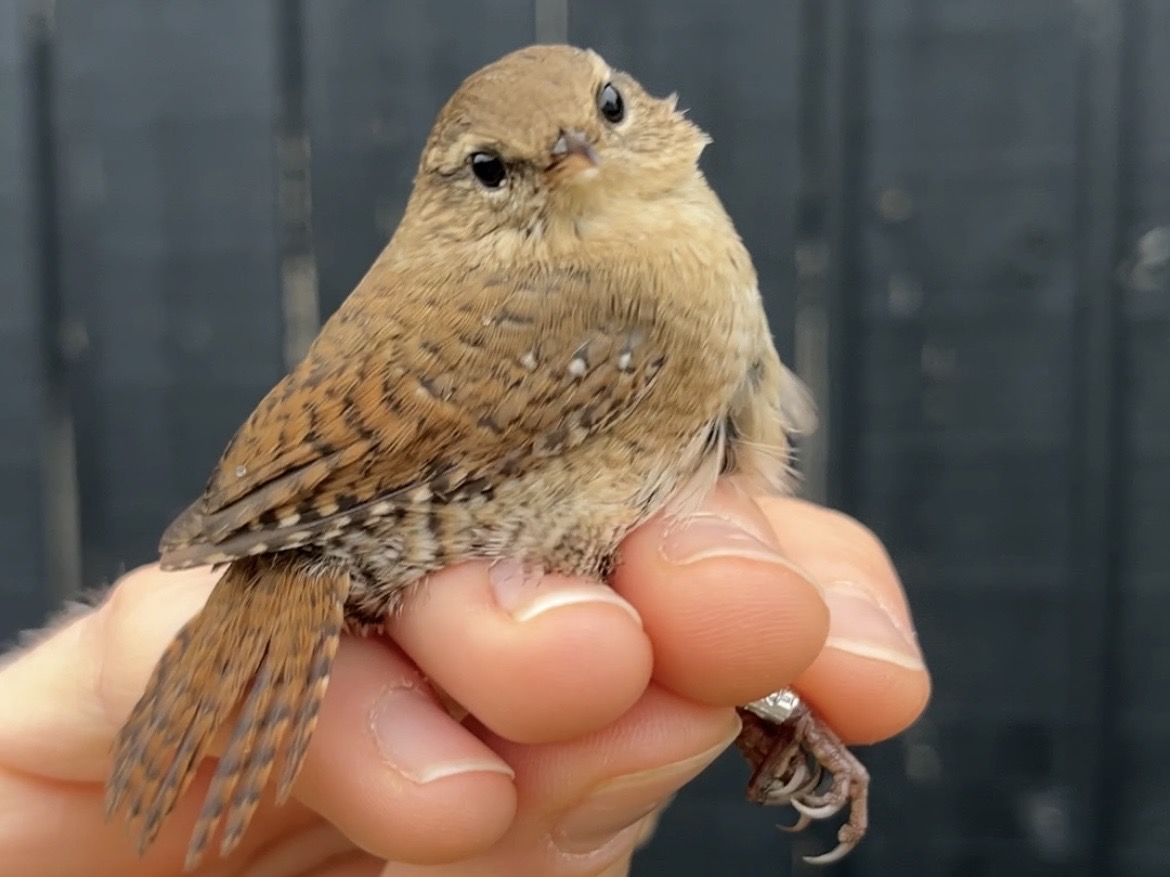 We had the most adorable Wrens today - just look at this one! Picture by Mathilde Sif Eiby.
The lighthouse garden was significantly busier than the station garden today, but I still found another Red-breasted Flycatcher in one of the station nets, that I could surprise Strummer with. Two in one week!
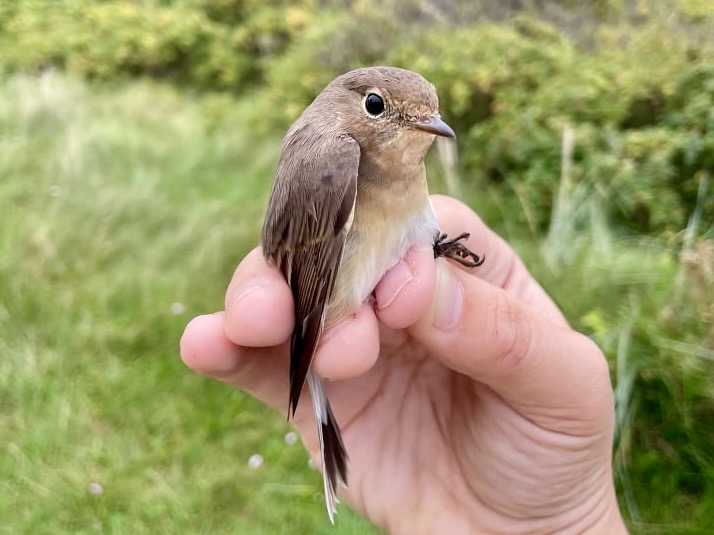 Our second Red-breasted Flycatcher in a week! Picture by Strummer Edwards.
In the afternoon Storm was helping out Strummer at the lighthouse, and they somehow got a Meadow Pipit (Engpiber) in our Helgoland Trap! As it was the first Pipit I've seen in hand, I even got to ring it - what a treat, and our first this season too!
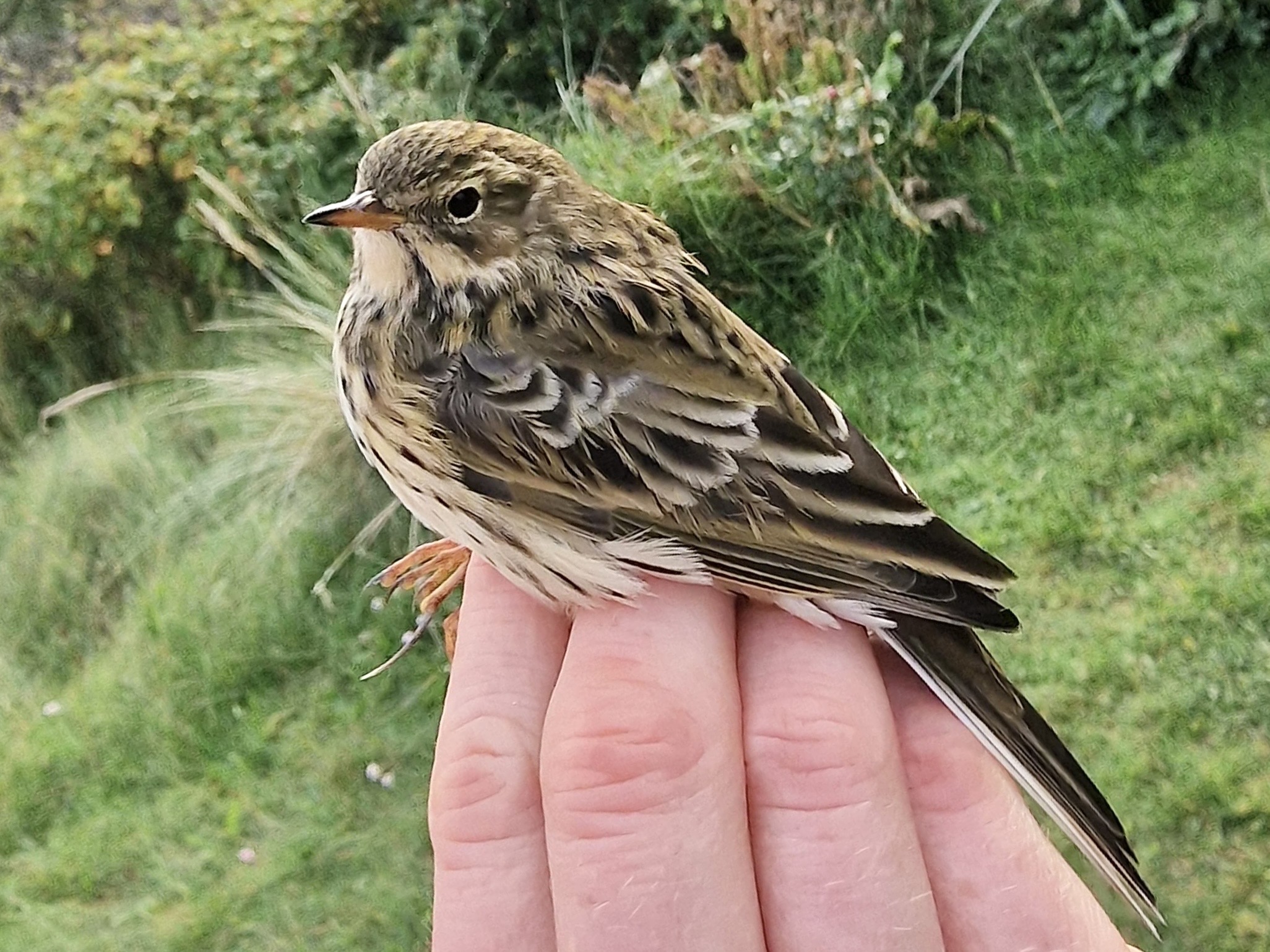 The Meadow Pipit from today. Look how long that back claw is! Picture by Anton Ræbild Jensen.
Today's numbers:
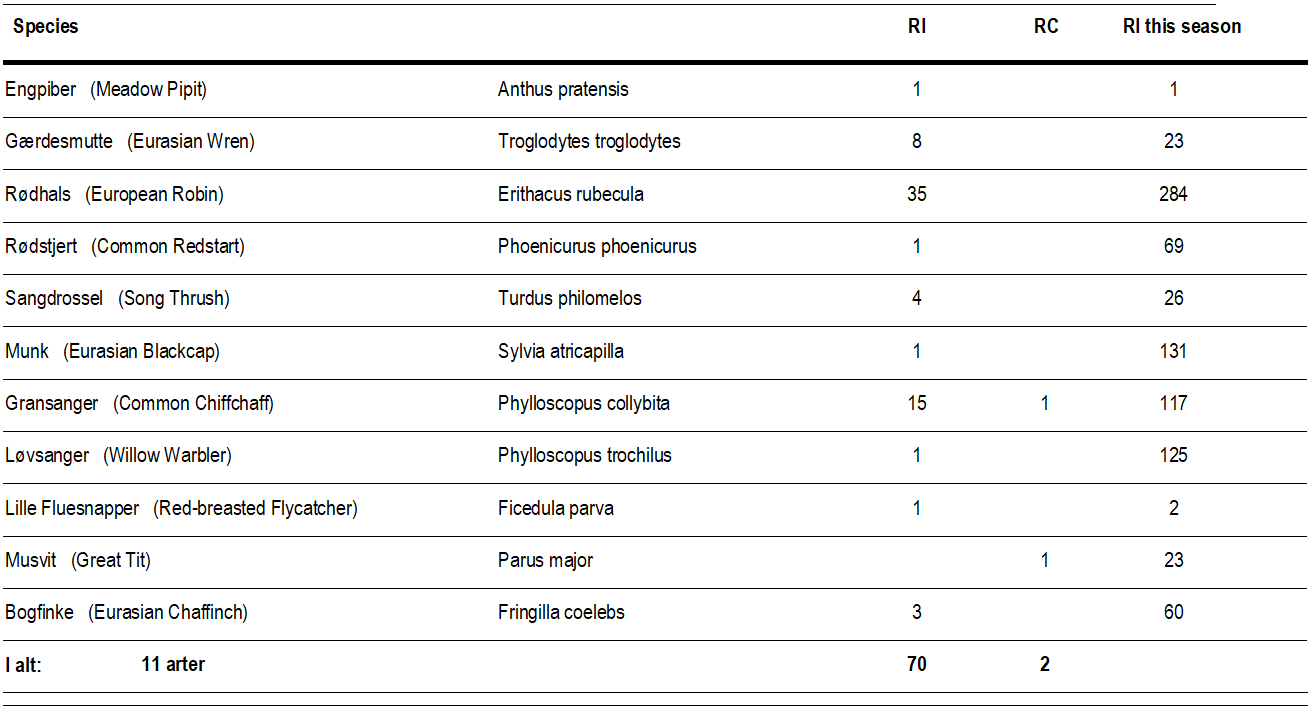
Observation:
Despite some morning drizzle, the migration obs went pretty well with a steady number of common scoters (Melanitta nigra). This was also a great day for red-throated divers (Gavia stellata) with several flocks of up to 6 individuals flying past. A total of 143 individuals were counted today!
Near the end of standard time, the rain sadly worsened our visibility quite a bit. However, it did draw the gannets (Morus bassanus) closer to the coast, giving us a great view of them flying past. A total of 47 gannets were counted, a great number compared to the last few days I (Storm) have been on observation. Gannets are some of my favourite sea birds and it was nice to learn how to age them from Anton. It is relatively easy as they change their plumage yearly between the 1st and 5th year from a uniform brownish, slowly turning their iconic white with black wingtips.
There were not many other species of note today, and almost no passerines due to the unfavourable weather conditions. Sadly we did not see the local great skua (Stercorarius skua) today but we hope it's doing well wherever it has gone.
At the station: Strummer Edwards, Mathilde Sif Eiby, Anton Ræbild Jensen, Storm Borum and Johan Them Steffensen
Just a drizzle of rain and birds
mandag 28. september 2026
Ringing: We were expecting a more rainy morning, but in the end we actually managed our full 5 hours of standardized ringing by just delaying the opening for an hour. We didn't see a lot of birds, but Johan got to ring the few we had. Overall it's been a great first week for me in Blåvand though, and from Henrik's recommendation, I also got my C-license today, having now handled almost 750 birds of almost 50 different species!
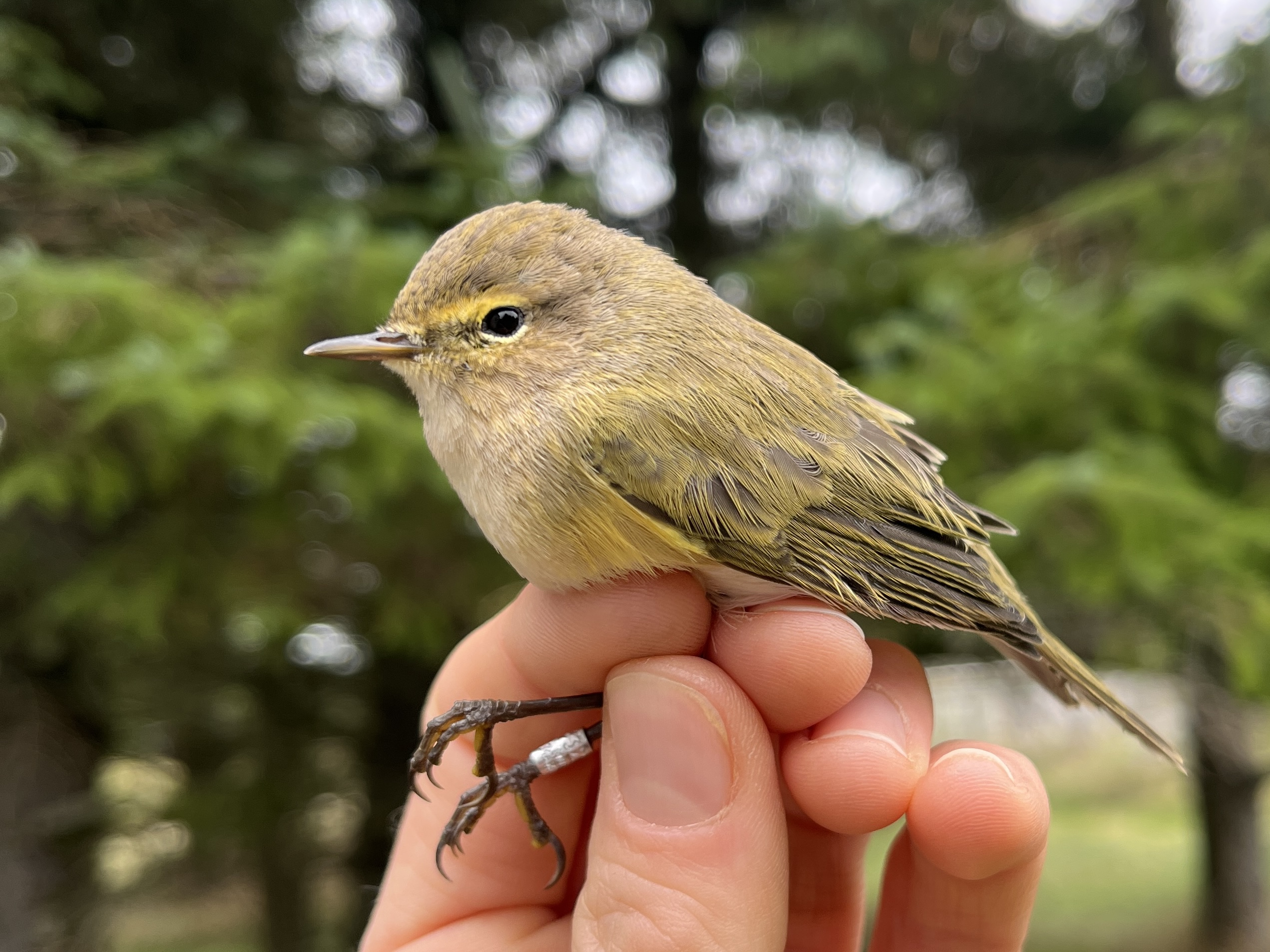 Who doesn't love Chiffchaffs? Picture by Mathilde Sif Eiby
Today's numbers:
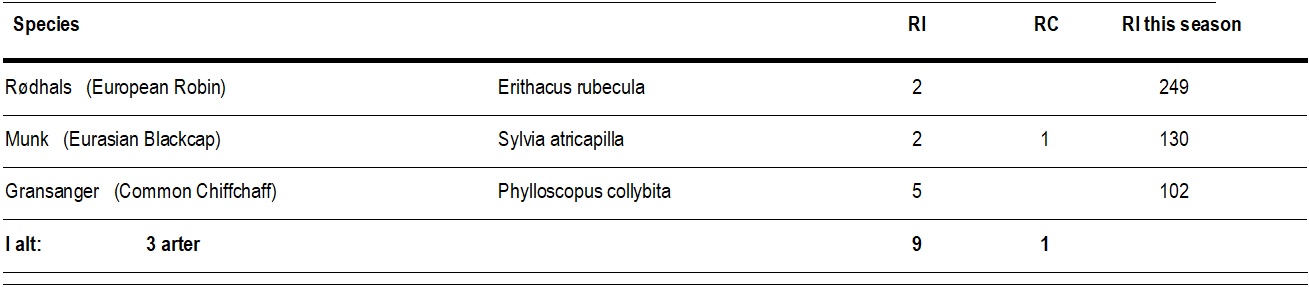
Observation: It is wild how much a little rain can do to a good obs...
Like yesterday, the wind was (mostly) from the south and southeast, but unlike yesterday, the visibility was low, and it rained slightly for most of the 3 hours at obs. This resulted in an absolutely pitiful obs. The only notable numbers today were the 1216 Common Scoters (Melanitta nigra) migrating past, as well as the 406 Herring Gulls (Larus argentatus) and 197 Black-headed Gulls (Chroicocephalus ridibundus) resting on the beach. Luckily, Storm was with me the whole time, and we got the most out of our time in the rain.
At the station: Strummer Edwards, Mathilde Sif Eiby, Anton Ræbild Jensen, Storm Borum and Johan Them Steffensen
Jay say WHAAAAT
søndag 27. september 2026
Ringing: More new species in the net today! I'm really on a ringing streak - Strummer also keeps pointing out how different ringing has been this past week, compared to the last weeks.
The birds were singing like crazy this morning, but surprisingly few flew into the nets. The Yellow-browed Warbler seems to be consistently coming back every day in the same net though, and with some new input from Strummer's ringing teacher, today I decided to put it as a young bird born this year (past days we haven't managed to age it). A bit later in the morning, I was suddenly also fortunate enough to get a beautiful female Reed Bunting (Rørspurv).
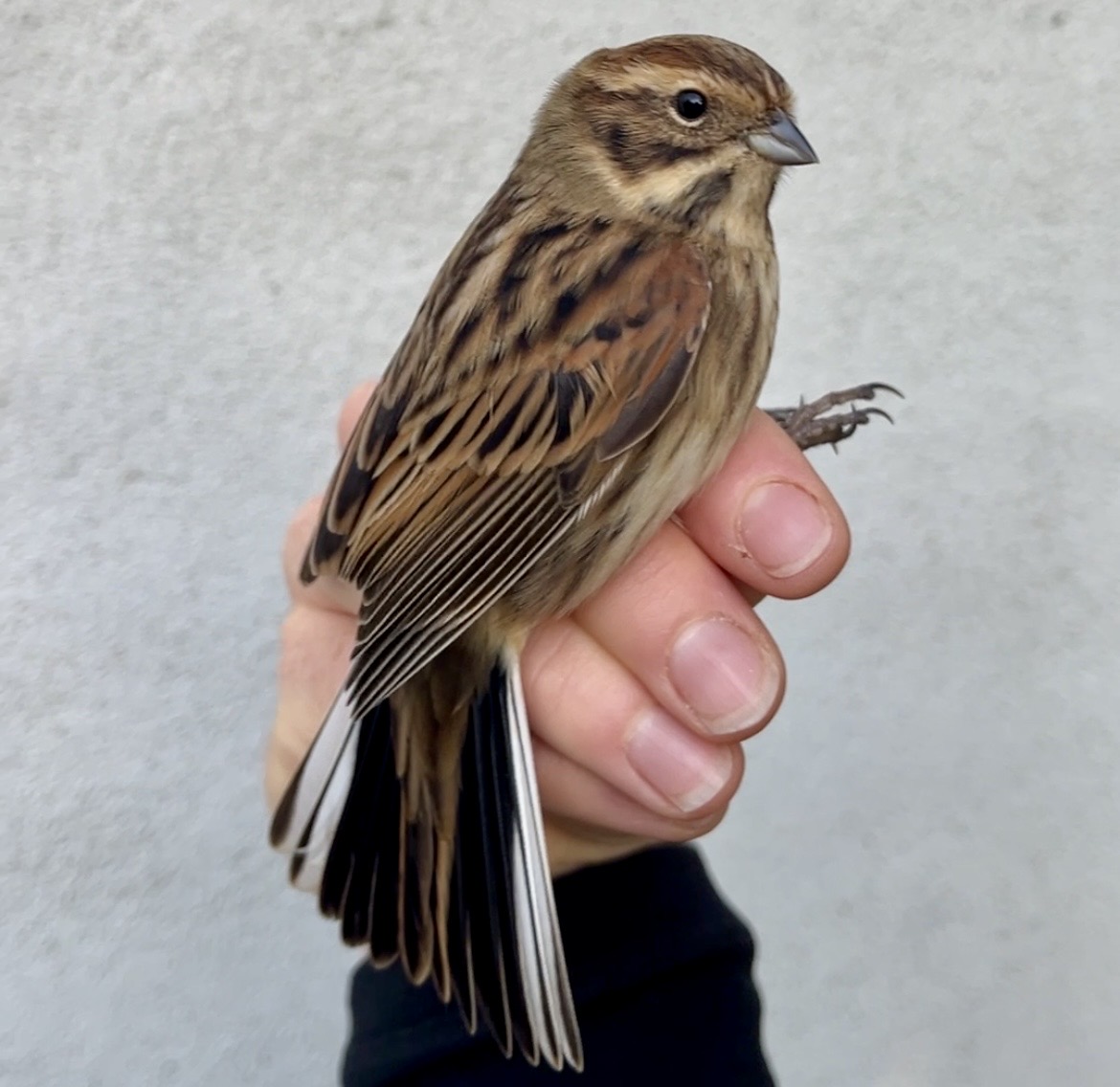 Our first Reed Bunting in the net this season! Picture by Mathilde Sif Eiby.
Not that long after, Strummer calls me with more great news! As they were extracting one of their dream ringing species, the Eurasian Jay (Skovskade), a Sparrowhawk (Spurvehøg) flew into the net beside them, so we both got a new ringing species today! My Sparrowhawk was behaving so well, and then came the Jay - definitely the noisiest bird, I've ever been in a room with - it's so loud, my ears were hurting!
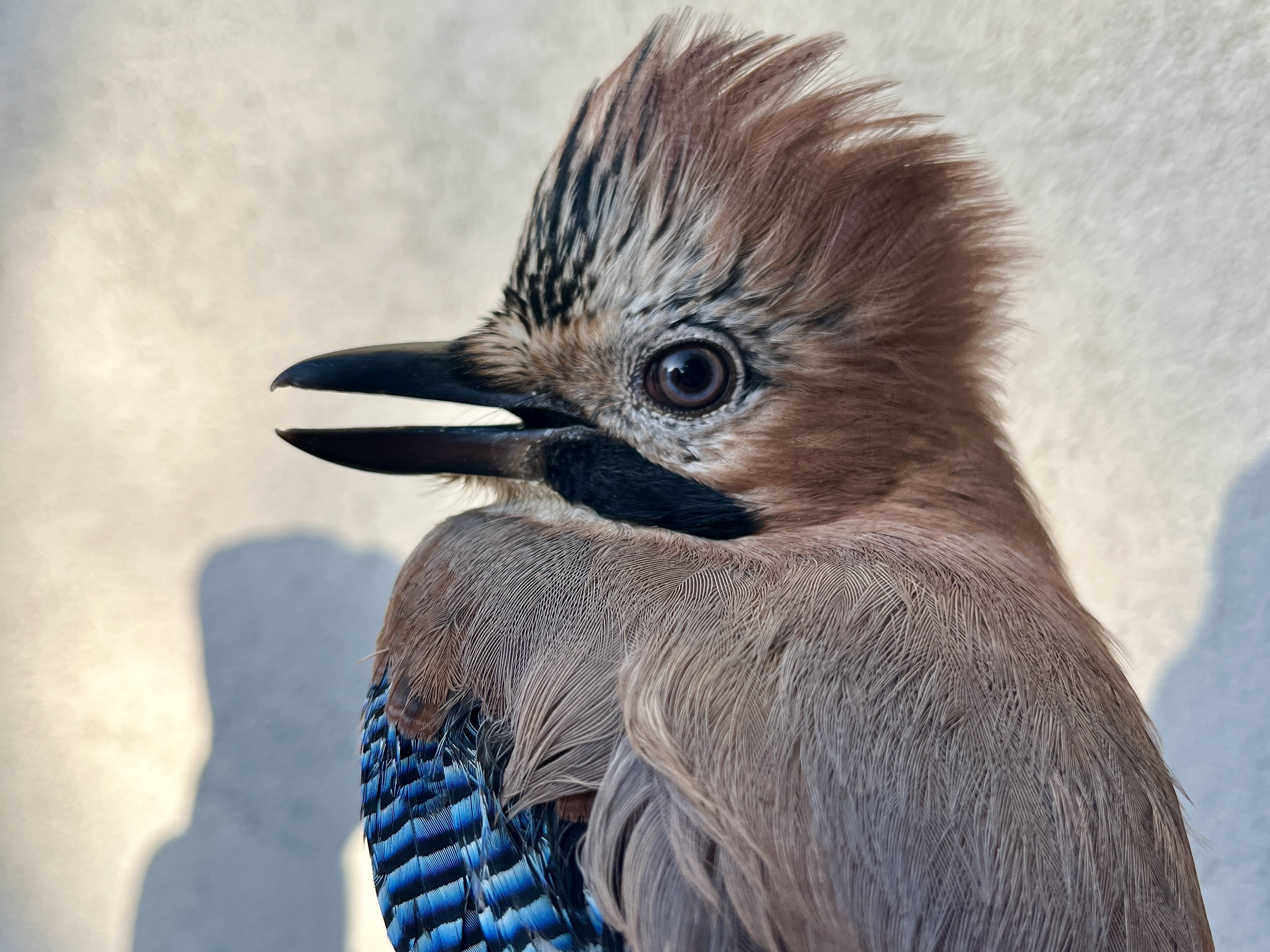
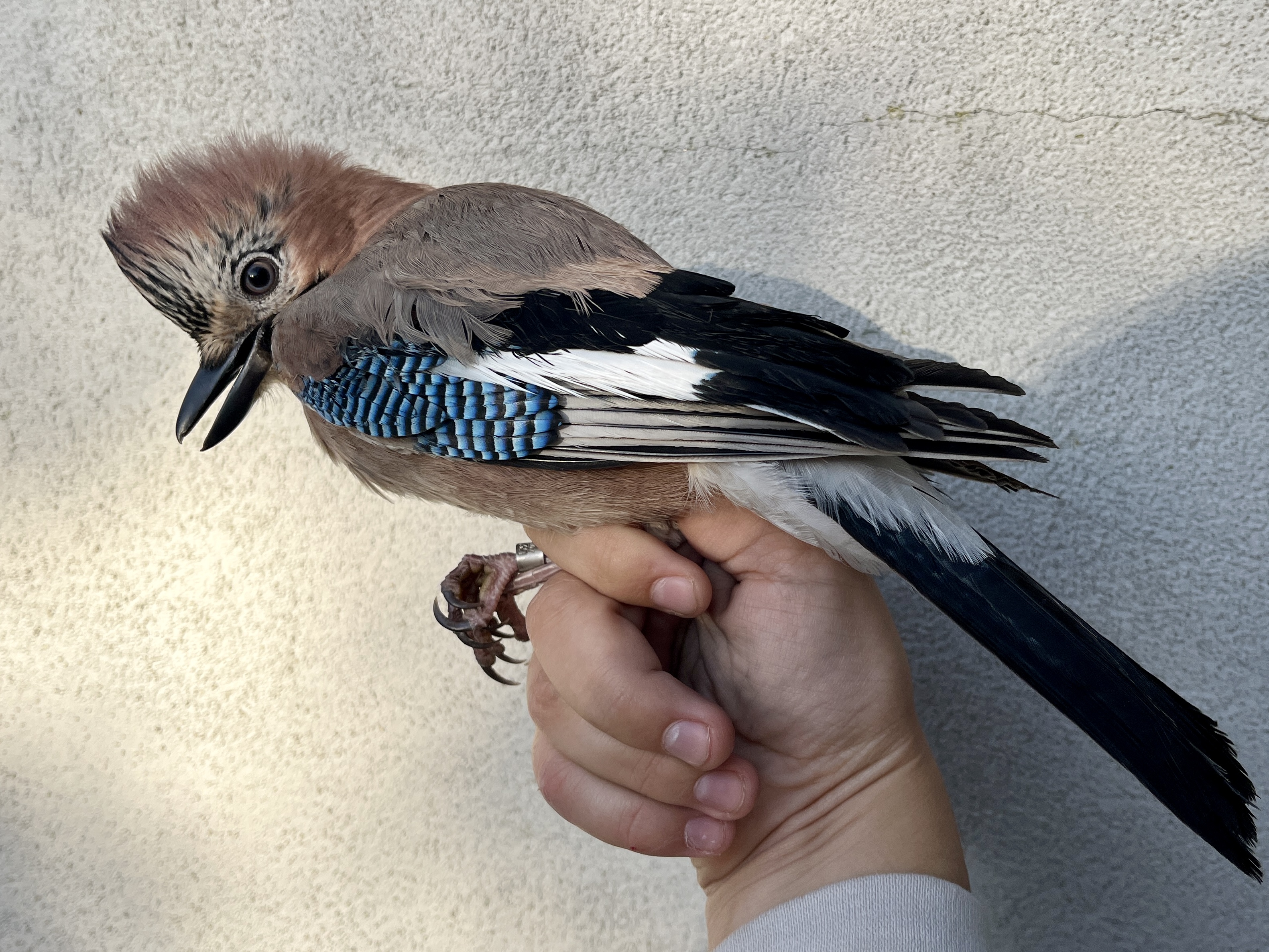 LOOK AT THIS EURASIAN JAY. Pictures by Mathilde Sif Eiby.
We weren't really getting anything after that, but luckily the Bird Gods are with us, and BAM, Anton calls from the obs, saying they found the Great Skua (Storkjove) just chilling right in front of them on the beach. So happy there were no birds that round, so I could run straight to see my first Great Skua!
Today's numbers:
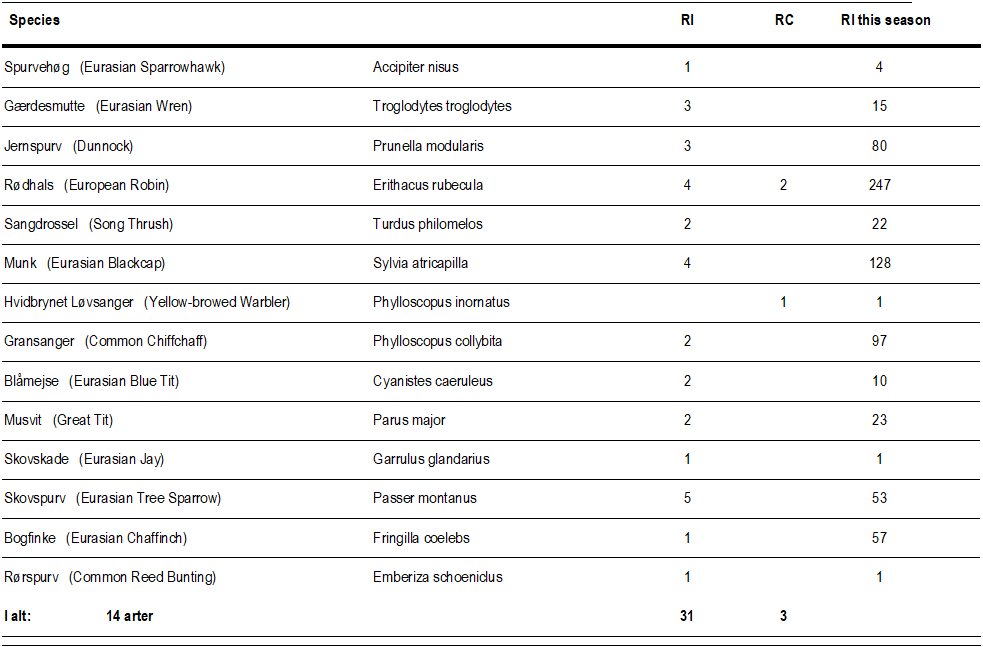
Observations: Today was a great day at obs - probably the best I (Anton) have had since arriving. The winds (finally) changed from western to eastern winds, and the passerines certainly noticed!
With help from Henrik, Storm, and Jakob, we managed to count large numbers of migrating finches, pipits, and other passerines, as well as some migrating waders. The most prevalent species of pipit was the usual Meadow Pipit (Anthus pratensis), with about 545 individuals flying past. There were, however, also okay numbers of both Tree Pipits (Anthus trivialis) and Rock Pipits (Anthus petrosus), with 25 and 13, respectively.
As for the finches, there were 128 Eurasian Siskins (Spinus spinus), 78 Linnets (Linaria cannabina) and a couple of Redpolls (Acanthis flammea) and Red Crossbills (Loxia curvirosta). The real highlight of the day (besides the Great Skua, of course) was the Chaffinches (Fringilla coelebs) and Bramblings (Fringilla montifringilla). During the just 3 hours we spent at the standardised obs, a total of 11491 Chaffinches/Bramblings flew by. According to DOF-Basen, this is the largest number of Chaffinches and Bramblings counted at standard obs since at least 2021!
And as if that wasn't enough, we also got large numbers of Starlings (Sturnus vulgaris) with 710 individuals, good numbers of Barn Swallows (Hirundo rustica) at 115 individuals, and a decent amount of Dunnocks (Prunella modularis) at 209 individuals.
At the station: Strummer Edwards, Mathilde Sif Eiby, Jakob Hansen, Anton Ræbild Jensen, Storm Borum and Johan Them Steffensen
A Sparrowhawk and a Skua
lørdag 26. september 2026
Ringing: Today was a quite slow day in the garden, but the Yellow-browed Warbler (Hvidbrynet Løvsanger) from yesterday came back, so we could adore it again, and just as we had processed it, Strummer came back with a Sparrowhawk (Spurvehøg) in hand! Also such a beautiful bird, and I hope we'll catch some more!
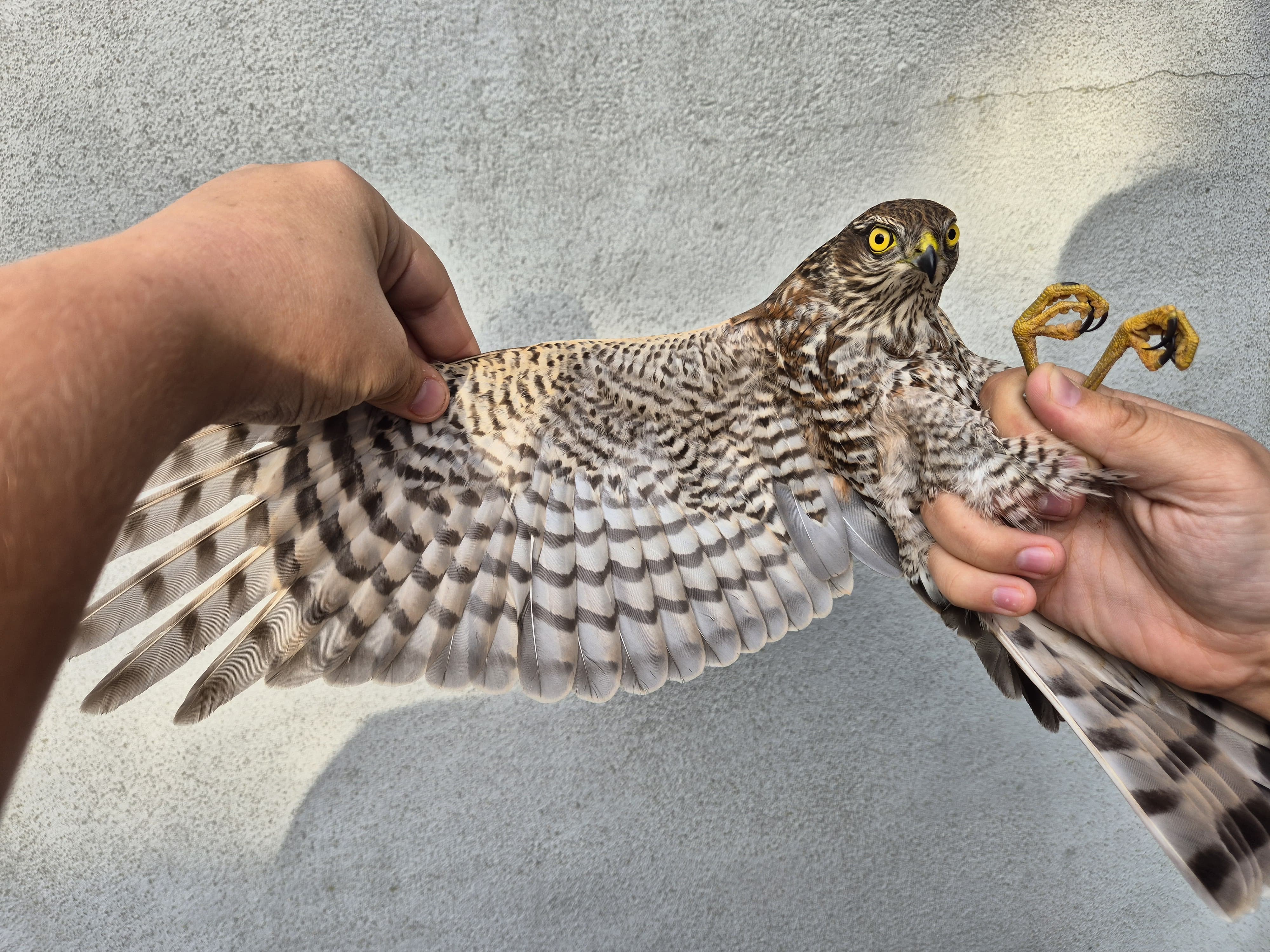
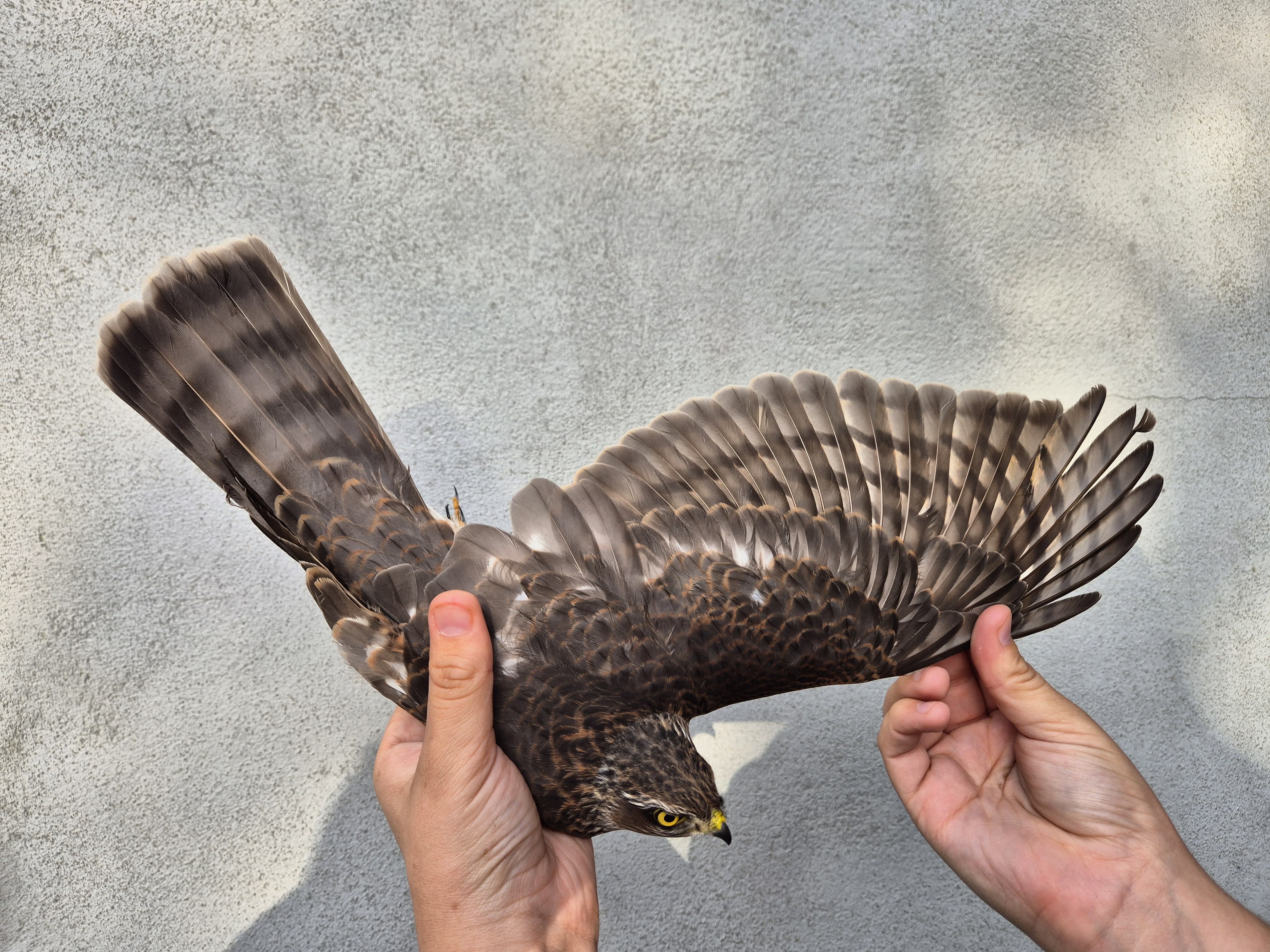 The young male Sparrowhawk from today, sexed by the size (the females are BIGGER), and aged on the overall plumage characteristics and the lack of moult limits - in older birds there will usually always be several generations of feathers present. Pictures by Henrik Böhmer.
Another interesting bird from today was a young Bullfinch (Dompap), that unlike our last young bullfinch was finally growing it's male-coloured feathers!
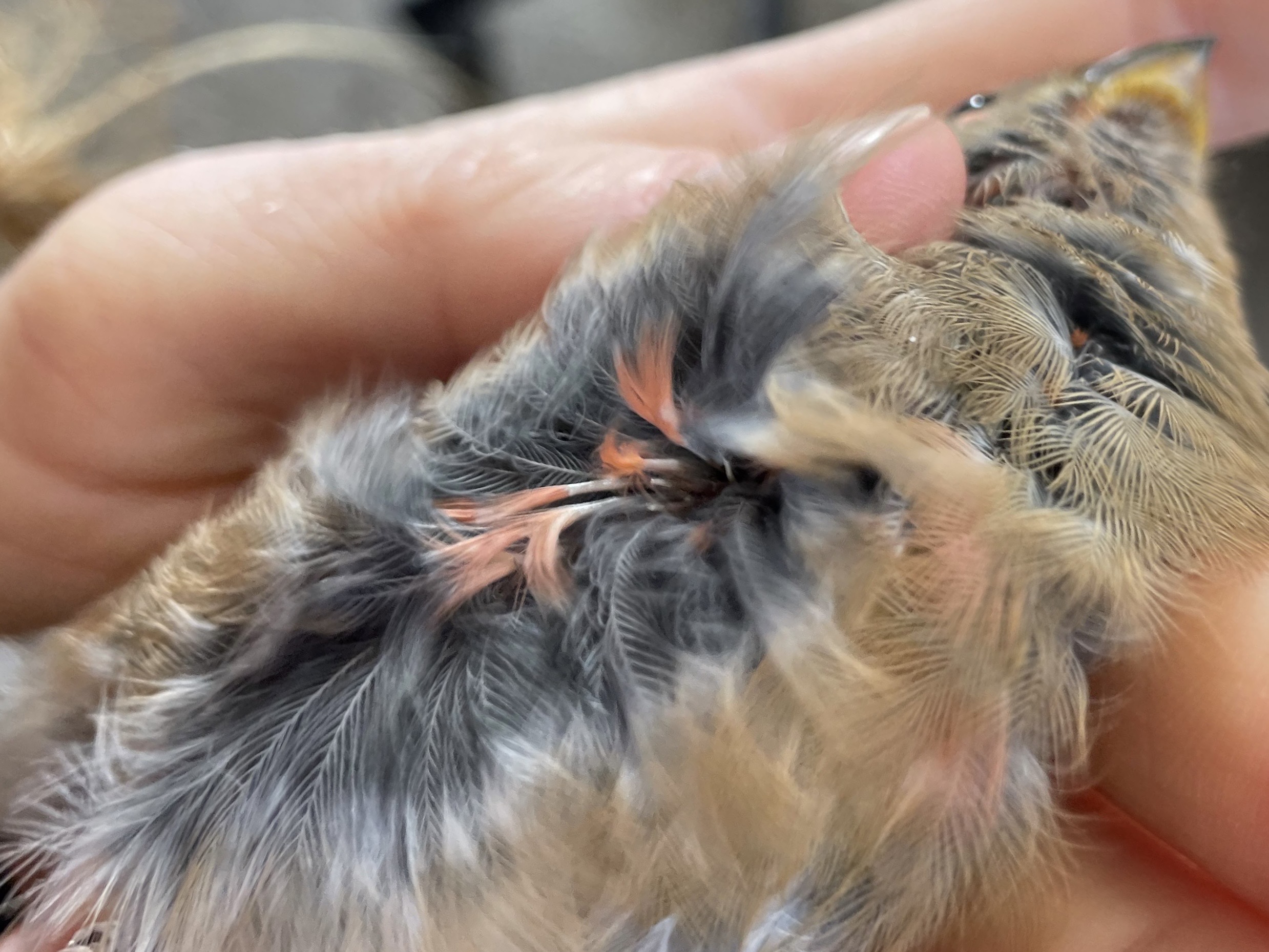 A young Bullfinch with male-coloured (red) pinfeathers on the flank. Picture by Strummer Edwards.
Today's numbers:
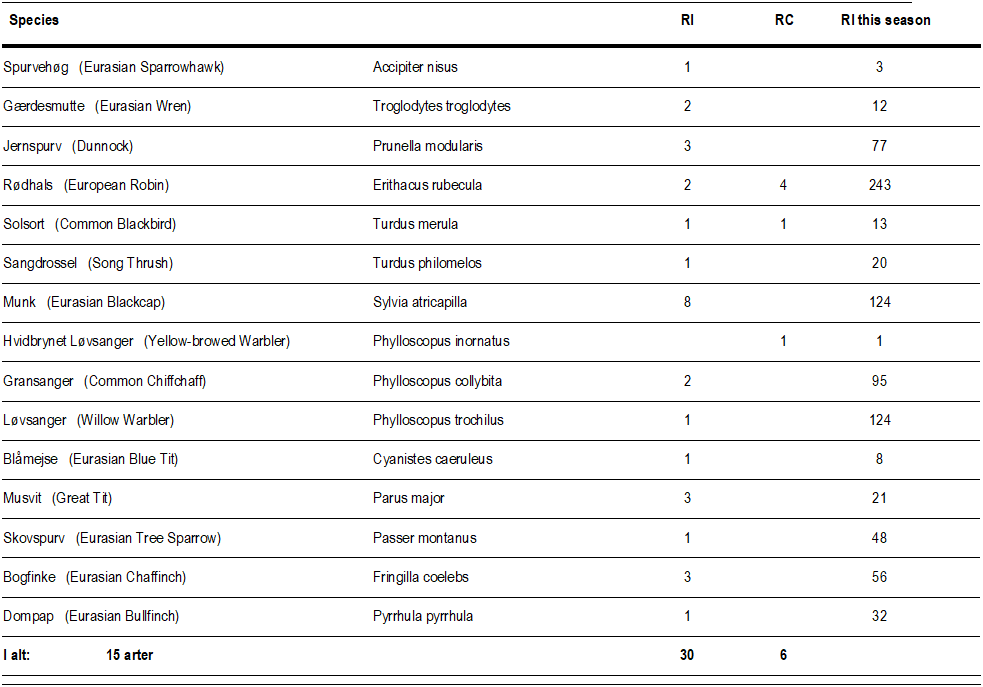
Observations: Man, am I beginning to sympathise with Johan by now…
Lately, if you have been reading the obs-blog, you might have noticed a pattern with westerly
winds resulting in blogs where either Johan or I complain about boring obs with no exciting
species. And this was just another day of that… almost.
The most prevalent species today were the usual suspects: 884 Common Scoters (Melanitta nigra), 54
Red-throated Loons (Gavia setallata), and 208 Meadow Pipits (Anthus pratensis) - not terrible, but
not exciting either.
The other species migrating today were also “just” the usual passerines, with mostly Grey
Wagtails (Motacilla cinerea), Chaffinches (Fringilla coelebs), Eurasian Siskins (Spinus spinus),
and Tree Pipits (Anthus trivialis). The day was looking to be incredibly boring, until Jakob
suddenly said: “Anton, I have a weird bird in my scope; could you take a look?”. I looked into my
scope, and lo and behold, a beautiful Arctic Skua (Stercorarius parasiticus) was making its way
across the horizon. While Arctic Skuas aren’t rare by any stretch of the imagination, in the last 4
days I have been at obs, ZERO Arctic Skuas were present. I was beginning to doubt they even
existed at Blåvand!
All in all, that Arctic Skua saved the obs today, and I left "Hukket" with a somewhat satisfied disposition.
Other things: In the evening, just as we were about to sit down for dinner, Jacob came running in the door shouting about a Great Skua (Storkjove), that he had been chilling with on the beach for 15 minutes (without his phone), and soon after we were all out looking for it. We never refound it, but we got some fresh air and a nice sunset.
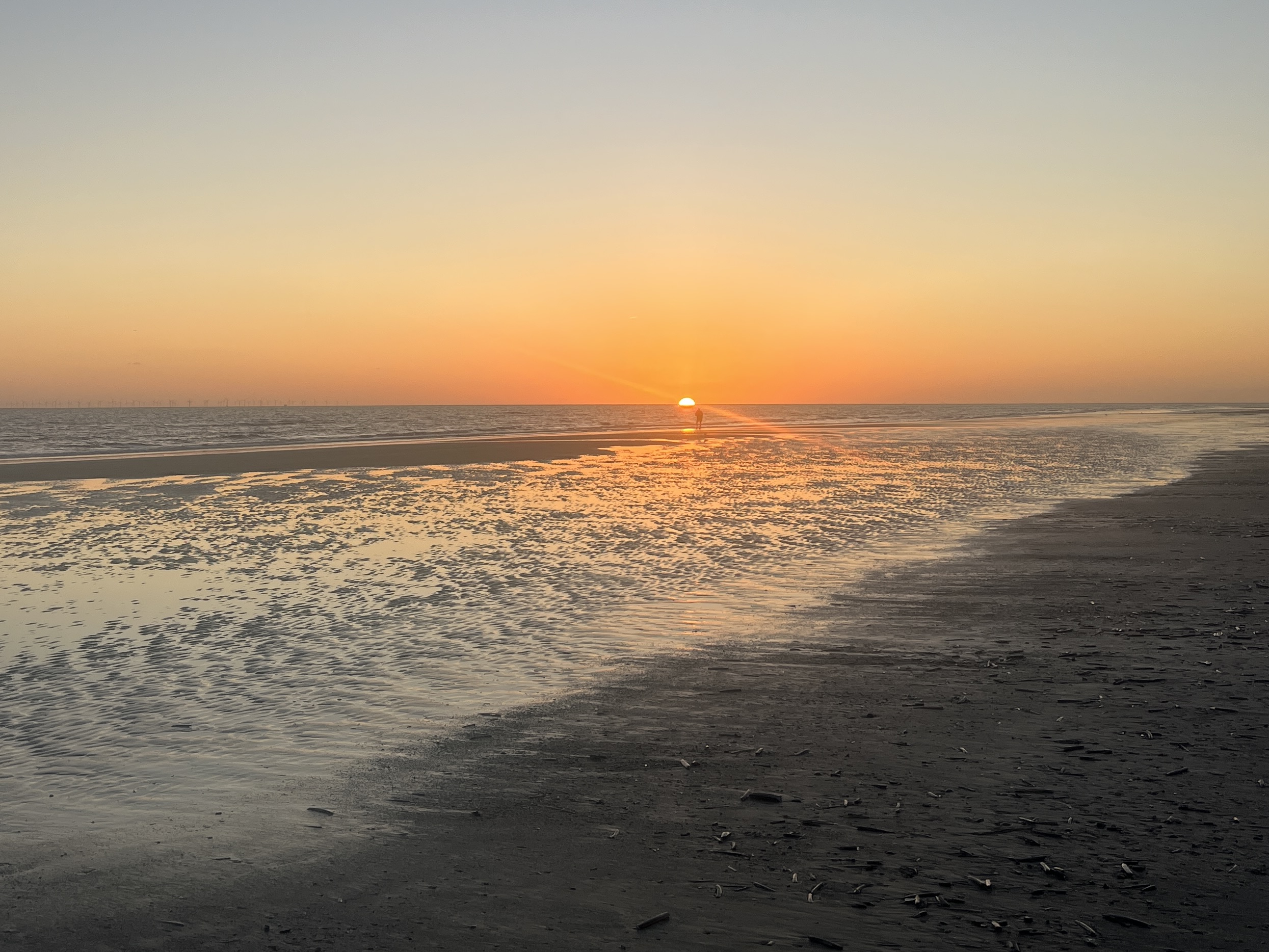 A sunset without a Great Skua. Picture by Mathilde Sif Eiby.
At the station: Strummer Edwards, Mathilde Sif Eiby, Jakob Hansen, and Anton Ræbild Jensen
The first BROW! And some obs...
fredag 25. september 2026
Ringing: Another day at Blåvand for me, mens new species in the net! It was a calm day, with a decent amount of birds in the net, and after a little group of Redpolls (Gråsisken), there was a surprise for me! My first House Sparrow (Gråspurv), a female, which was so significantly larger than the recent days' Tree Sparrows (Skovspurve), that I doubted myself for a minute - I love getting surprised by different features than expected, like the first time I saw a Chiffchaff (Gransanger) in the hand, and realised it had other colors than brown!
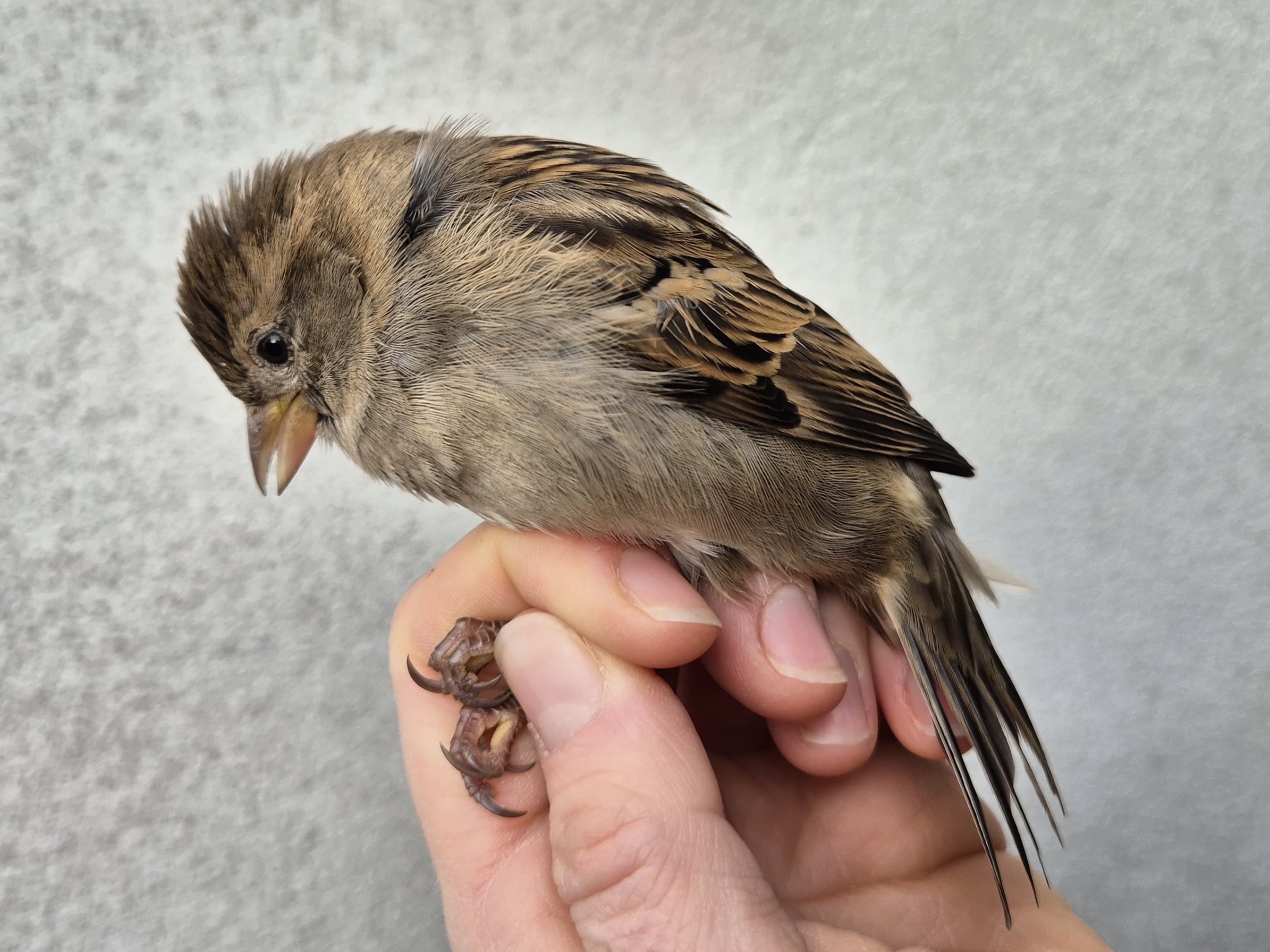 Today's female House Sparrow - a big handful compared to the rather small Tree Sparrows. Picture by Henrik Böhmer.
The rest of the day went by, and just as I was doing my last round, I saw a big fat BROW on a phylloscopus / leaf warbler in the net. I looked for the wing bars, and sure enough - first Yellow-browed Warbler (Hvidbrynet Løvsanger) of the season! I immediately called Strummer, who's never even seen it before, and they were ecstatic to get to ring a lifer!
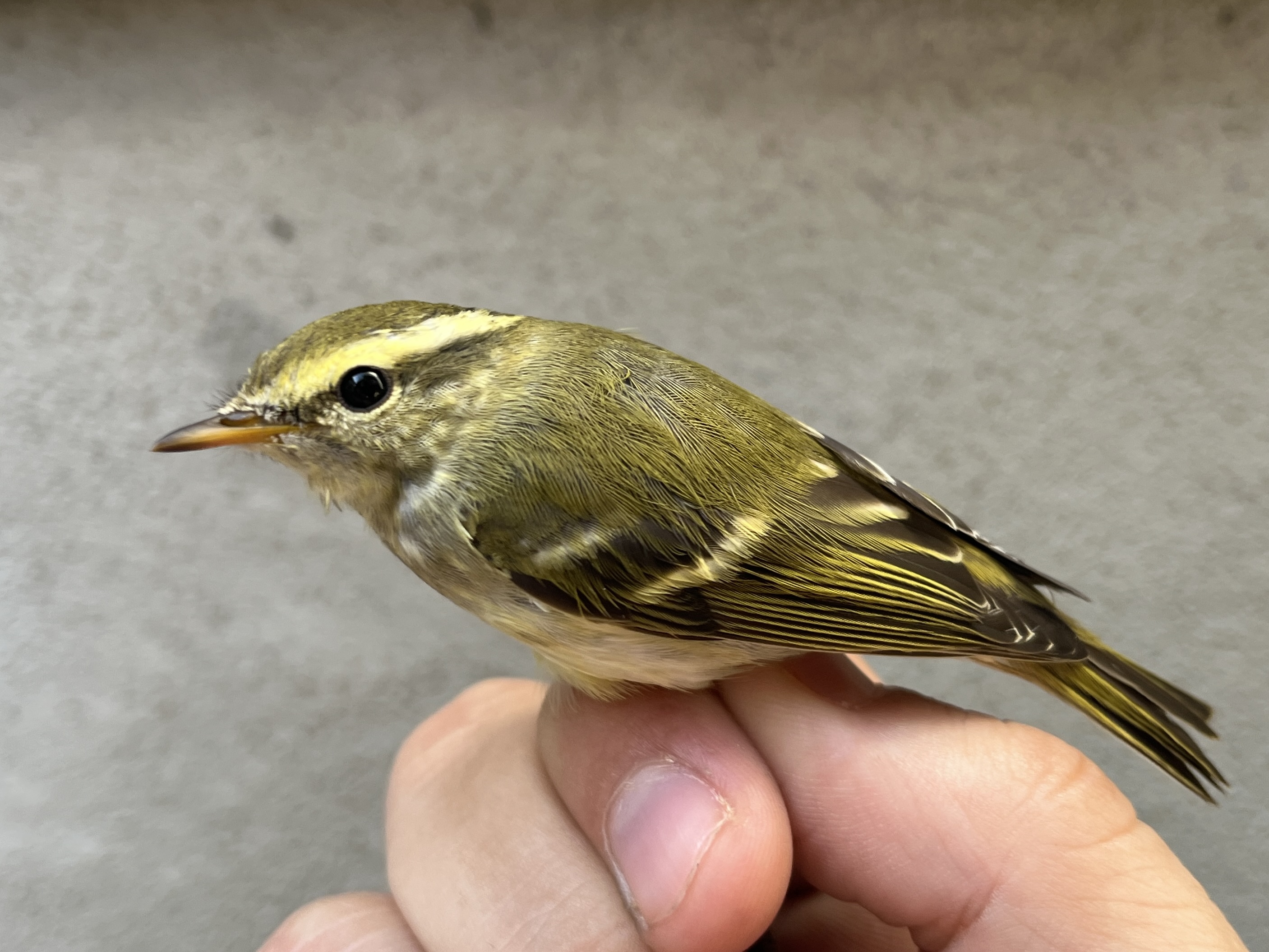 The cutest little Yellow-browed Warbler. Picture by Mathilde Sif Eiby.
Today's numbers:
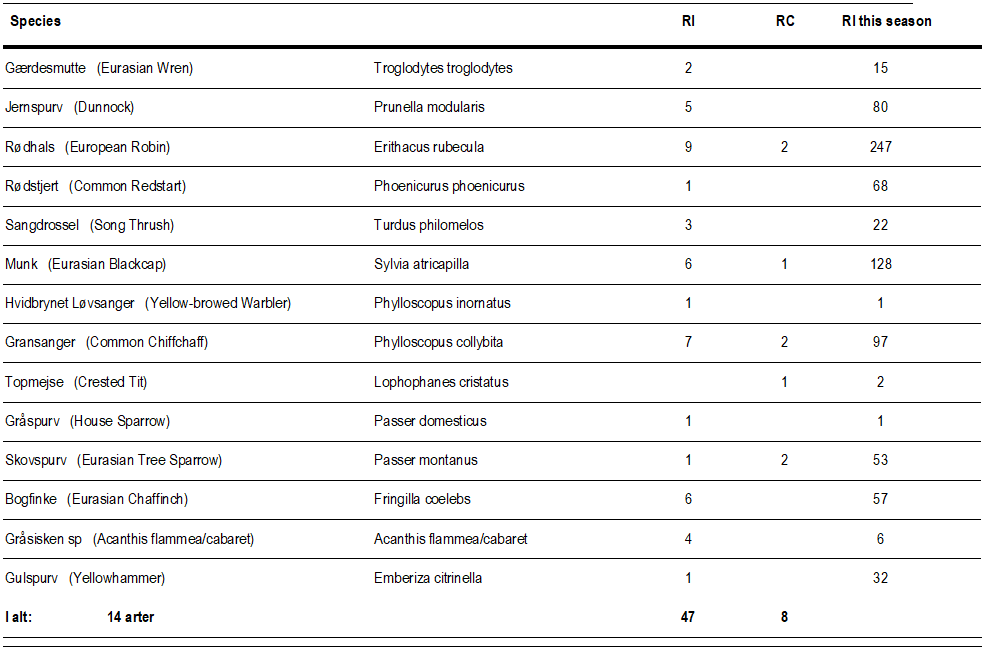
Observation: Today the wind was from the west, which of course means another day with a prerequisite for slightly unimpressive species and numbers. Luckily, Henrik joined us at obs today, so we managed to squeeze everything out of the day we could. This resulted in a surprisingly good diversity with species like Greylag Geese (Anser anser), Wigeons (Mareca penelope), Reed Buntings (Emberiza schoeniclus), and Jays (Garrulus glandarius).
As for the “impressive numbers”, we managed to produce 1061 Common Scoters (Melanitta
nigra), and 406 Meadow Pipits (Anthus pratensis), which are the highest numbers since I have arrived at Blåvand! We also counted a total of 53 Red-throated Loons (Gavia stellata), another okay number. Hopefully the wind will become better soon, so we can blow these numbers out of the water.
At the station: Strummer Edwards, Mathilde Sif Eiby, Jakob Hansen, and Anton Ræbild Jensen
A Shearwater and a Dream
torsdag 24. september 2026
Observation: Today was a day for seabirds, and with strong headwinds of 16 m/s from the NW, Jakob, Johan,
and I were hopeful.
The day started with an almost empty sea, with only a few common scoters (Melanitta nigra)
moving, and some resting gulls close to the beach.
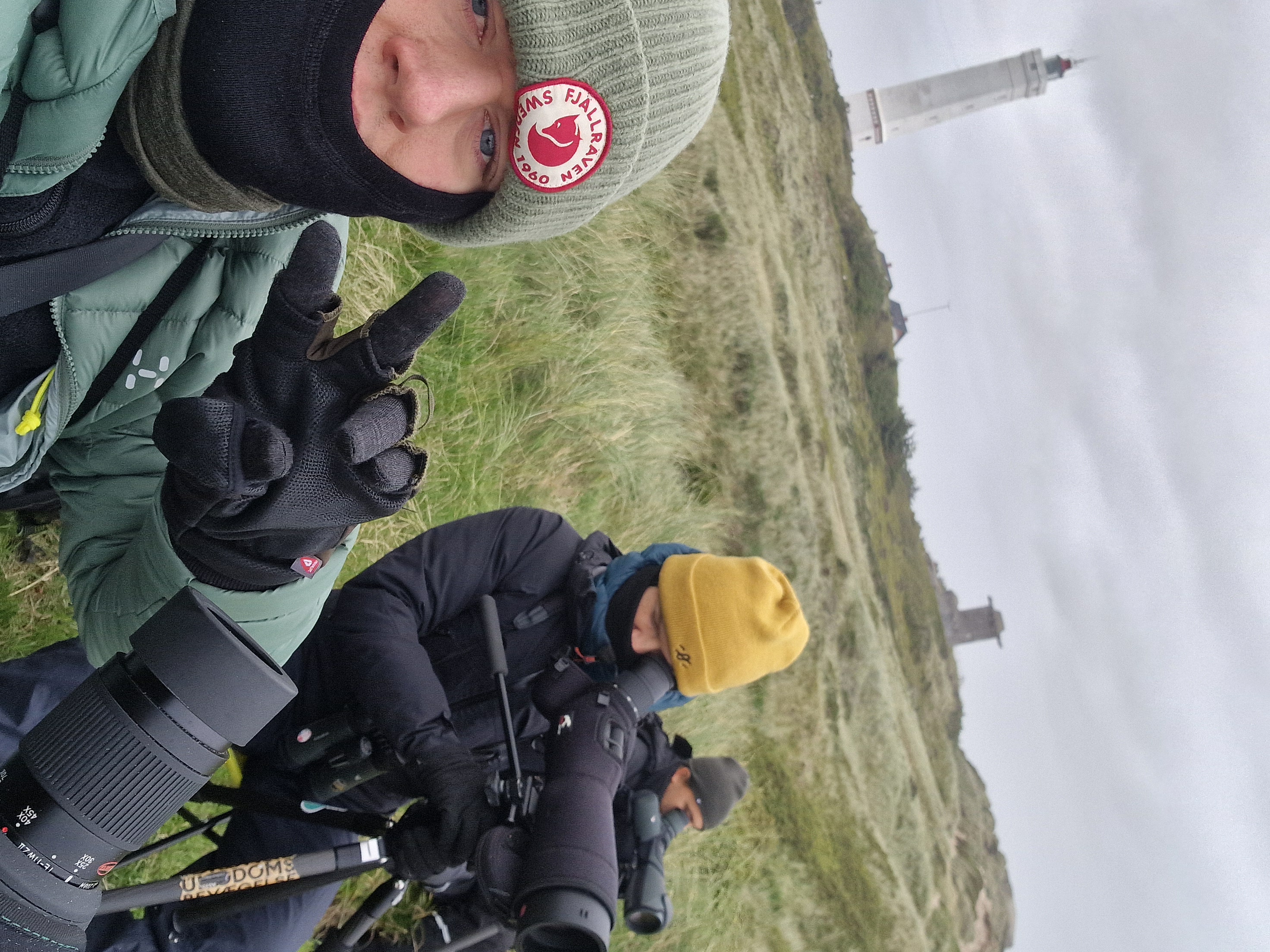
The all-star team desperately searching for shearwaters and storm-petrels. Photo: Anton Ræbild Jensen.
As the sun rose, the number of scoters moving picked up, but somehow the proper seabirds
refused to show themselves. We were really hoping for some shearwaters, as Jakob hadn’t
seen either of the 2 most common species here, sooty shearwater (Ardenna grisea) and manx shearwater (Puffinus puffinus). By 9, none had shown up, and we were beginning to doubt it would happen today, until Johan suddenly spotted one way out by the windmills. Jakob and I only managed to see it for a couple of seconds before we lost it in the meter-high waves out at sea. We were still stoked, though, as this bird was one of the bucket list species for today.
Unfortunately, Johan had to leave obs a bit early today, and by 10 it was only Jakob and I who
kept watch at obs.
As if one sooty shearwater weren’t enough, while Jakob and I were talking about packing up
around 11, we heard one dry and slightly electrical trill. I immediately yelled “RED-BREASTED
FLYCATCHER” (Ficedula parva) and looked at Jakob. He had also heard the call and agreed with me, sowe decided to see if we could try to find it. It was, however, not to be found, which really is a
shame after Jakob missed yesterday's ringed bird. This might as well have been the same
individual, and it would have been a really cool bird to show off to our guest. Maybe we will try
for it tomorrow, and see if it still is in the area.
The most remarkable numbers if the day were 379 common scoters (which was okay), 23
red-throated loons (Gavia stellata) and 2 gannets (Morus bassanus).
Ringing: Cancelled due to strong winds.
Other things: Johan is taking a few days at home, and will therefore not be featured in the blog for a short while.
At the station: Strummer Edwards, Mathilde Sif Eiby, Jakob Hansen, and Anton Ræbild Jensen
A little bird for a big number!
onsdag 23. september 2026
Ringing: Today we were prepared for anything, but the garden was much more quiet during opening round, than yesterday, and it also showed through some smaller first rounds. The birds kept a steady flow throughout the day though, and we ended up with 54 birds in the nets.
Among the birds, we had another beautiful specimen of my favourite (read the blog from yesterday ;-) ), and some really nice Tree Sparrows (Skovspurve), who also frequents the station's roof.
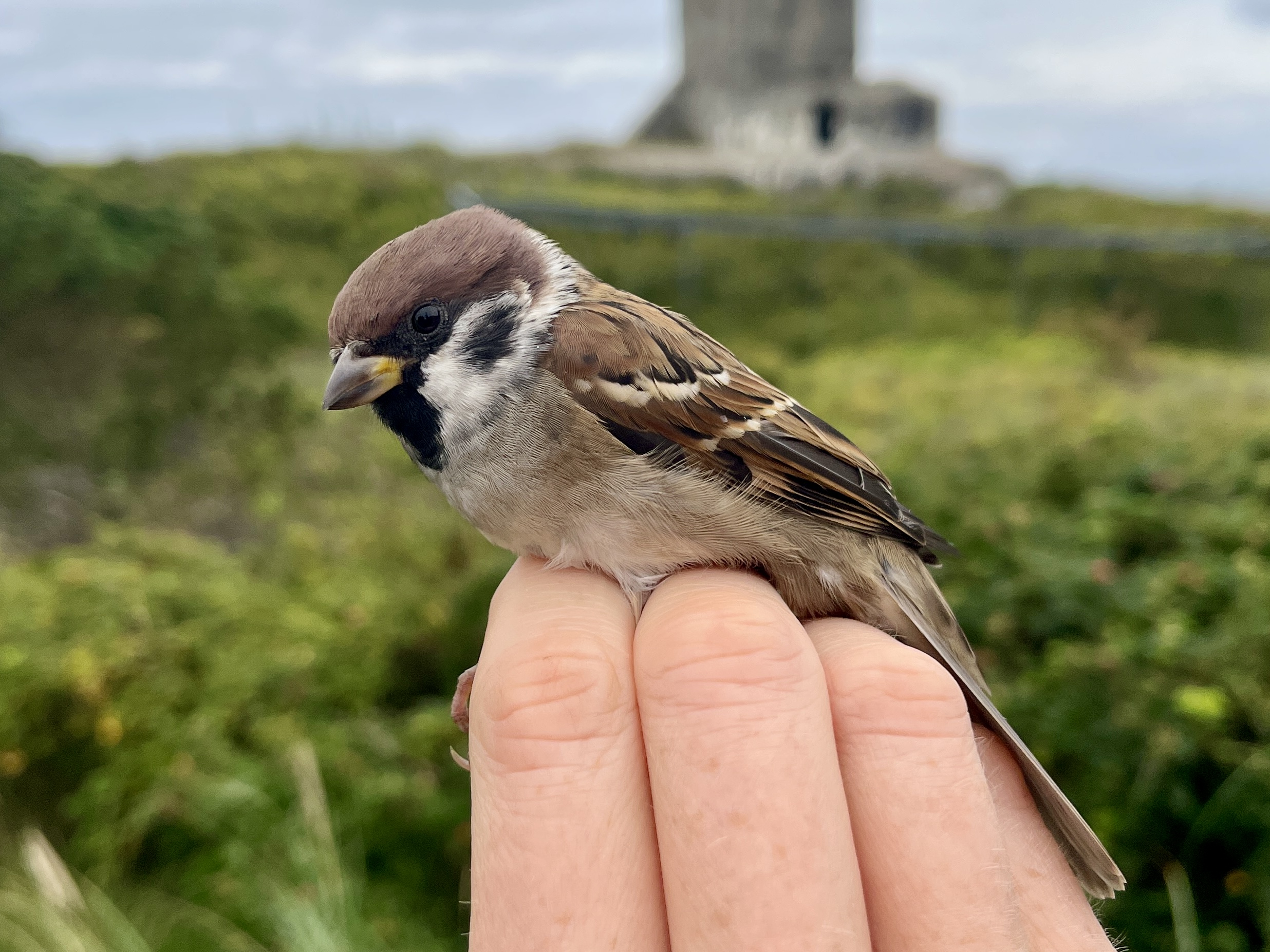 Our third Tree Sparrow today :-) Picture by Mathilde Sif Eiby.
Late morning I (Mathilde) was bringing some birds from the station garden to the lighthouse to ring, and I pass a fellow birder who tells me he's spotted a Red-Breasted Flycatcher (Lille Fluesnapper) in the lighthouse garden, to which I respond: "Cool, maybe we'll get it in the nets". And next round, GUESS WHAT?! I call Strummer, who calls Johan and Anton etc, and it ends up being Antons DK-species number 300!
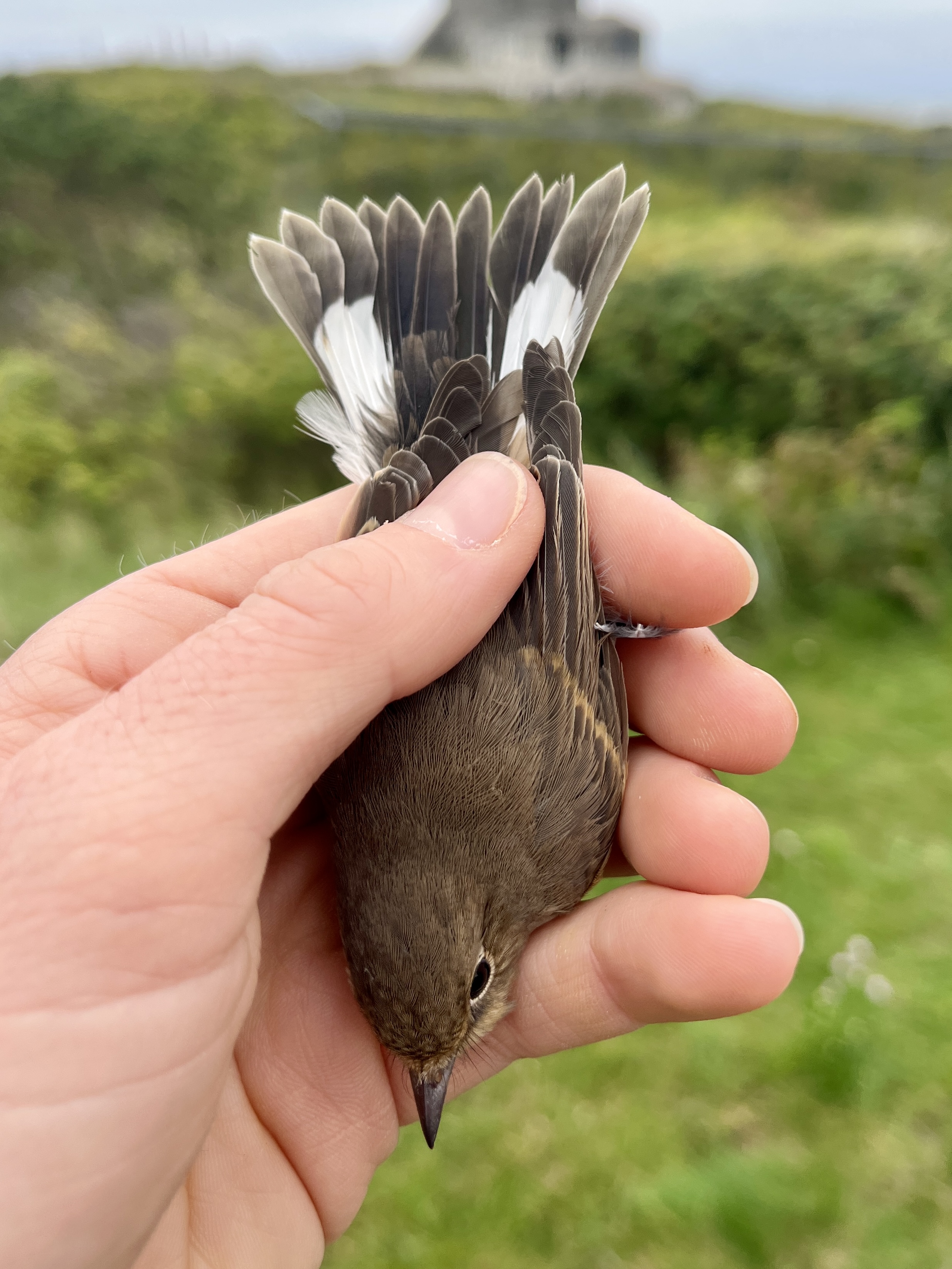 A young Red-breasted Flycatcher, distinguished on the tail, and aged from the light spots in the wing feathers called greater coverts. Picture by Mathilde Sif Eiby.
Lastly, at the end of ringing, after (second) last round didn't give a single bird, we were expecting a fast closing round, until Strummer shows up with 5 Coal Tits (Sortmejser) among more.
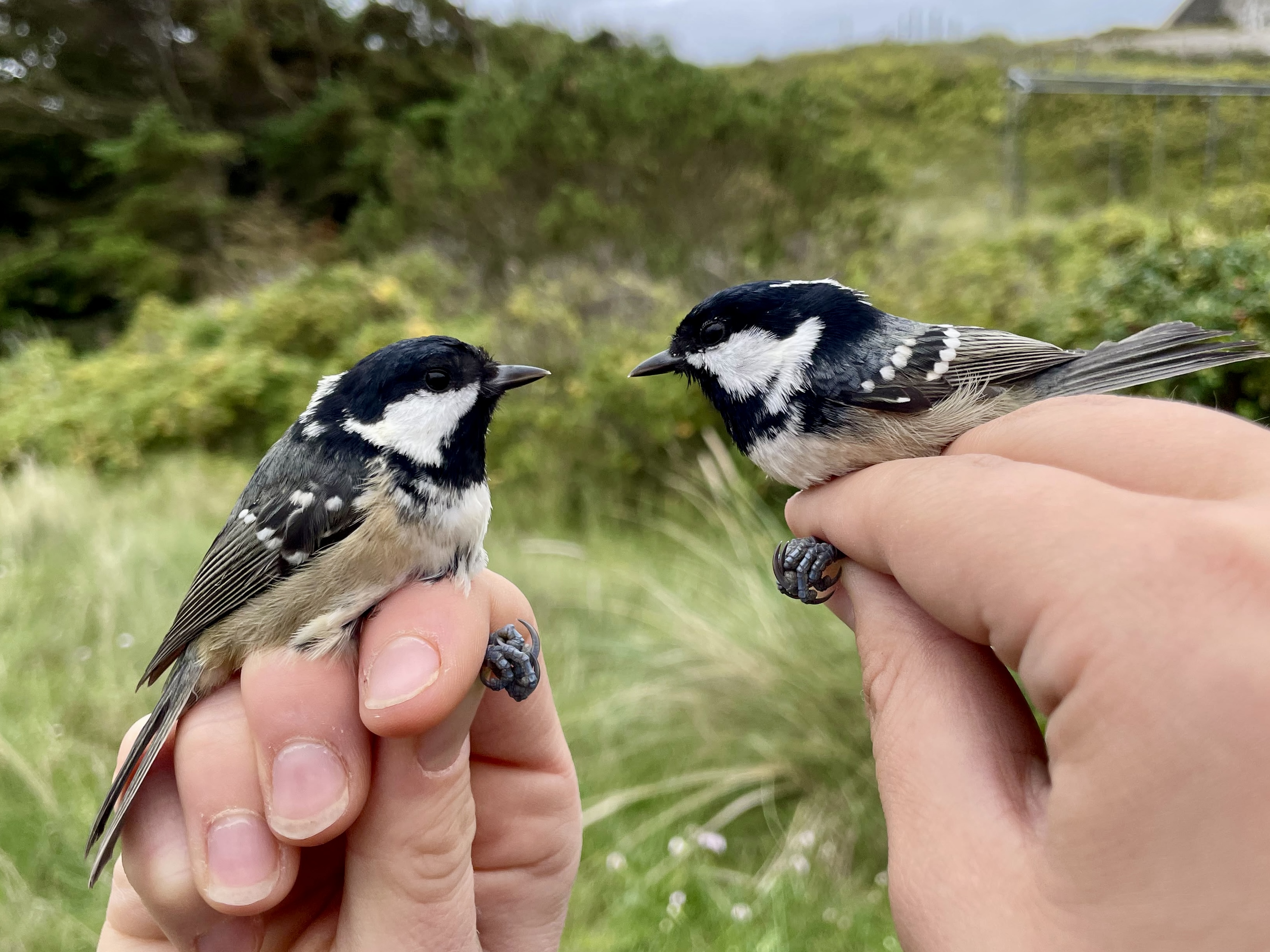 Two of the Coal Tits from today, all of which were young, seen from moult limits in the wing - in this case a clear contrast between the feathers within the feather group called greater coverts. Picture by Strummer Edwards.
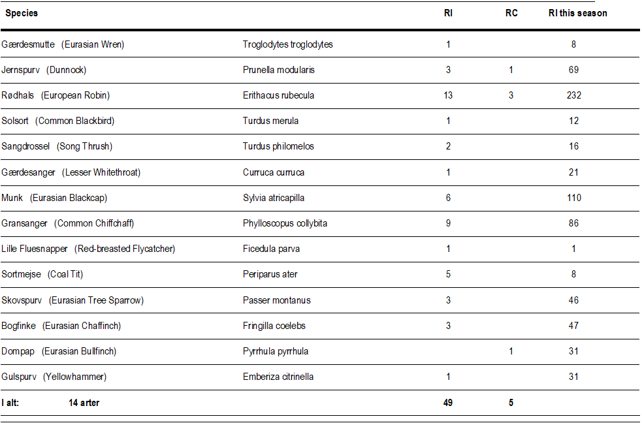
Today's numbers:
Observations: Today was my (Antons) first day at obs, and expectations were high after yesterday's influx of passerines. The weather still looked good, and I was hopeful for hundreds upon hundreds of small songbirds. That, however, was apparently not destined to happen.
The day started with a few meadow pipits (Anthus pratensis), some common scoters (Melanitta
nigra), and a few red-throated loons (Gavia stellata); however, not in large numbers. I was
optimistic that as the sun rose, so would the numbers. They did, but not remarkably, and by the
end of the day, we had only seen 318 meadow pipits, 298 common scoters, and 54 red-throated
loons on the obs.
As for the other passerines I was so hopeful for, the most notable numbers were 16 dunnocks
(Prunella modularis), 81 linnets (Linaria cannabina), 30 redpolls (Acanthis flammea), and 3
yellow wagtails (Motacilla flava). And as for the coastal birds, the only notable observation was
a razorbill (Alca torda) resting extremely close to the beach.
Furthermore, we were joined by a few birds of prey at obs today: 1 2k white-tailed eagle
(Haliaeetus albicilla) and 2 sparrowhawks (Accipiter nisus) flew by.
Tomorrow the wind looks good for a proper sea watch with chances for storm-petrels,
shearwaters, and skuas. After missing Sunday's obs, I am really looking forward to some
seabirds, hopefully a storm-petrel or a shearwater.
Other things: The station also welcomed a new guest, Jakob Hansen, who will be joining us at obs over the next couple of days.
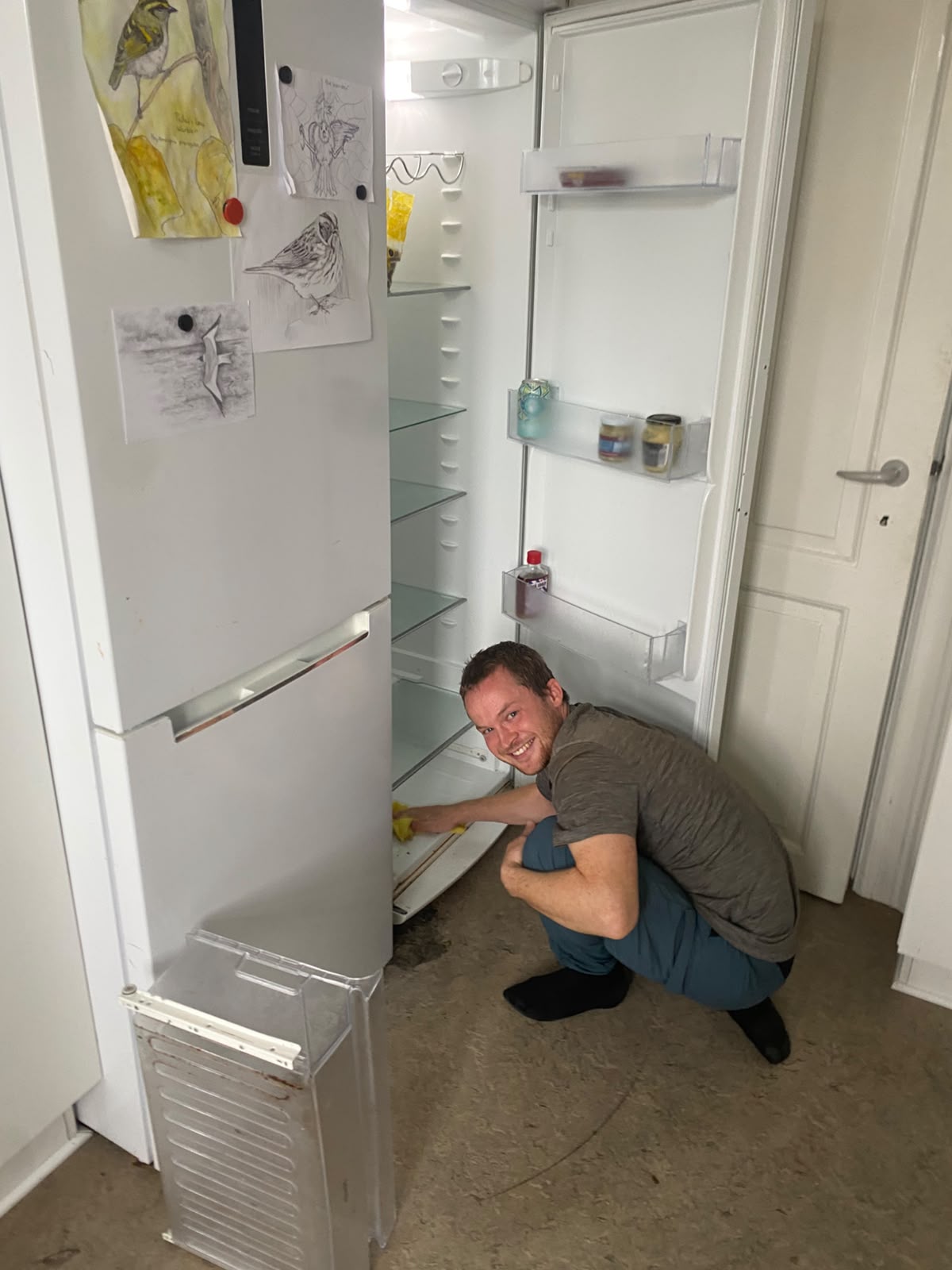 Here is Jakob picking up the slack by cleaning the fridge as soon as he arrived! Picture by Johan Them Steffensen.
While Jakob managed the fridge, I (Mathilde) threw myself at sorting the pantry, which I've been side-eying since I arrived.
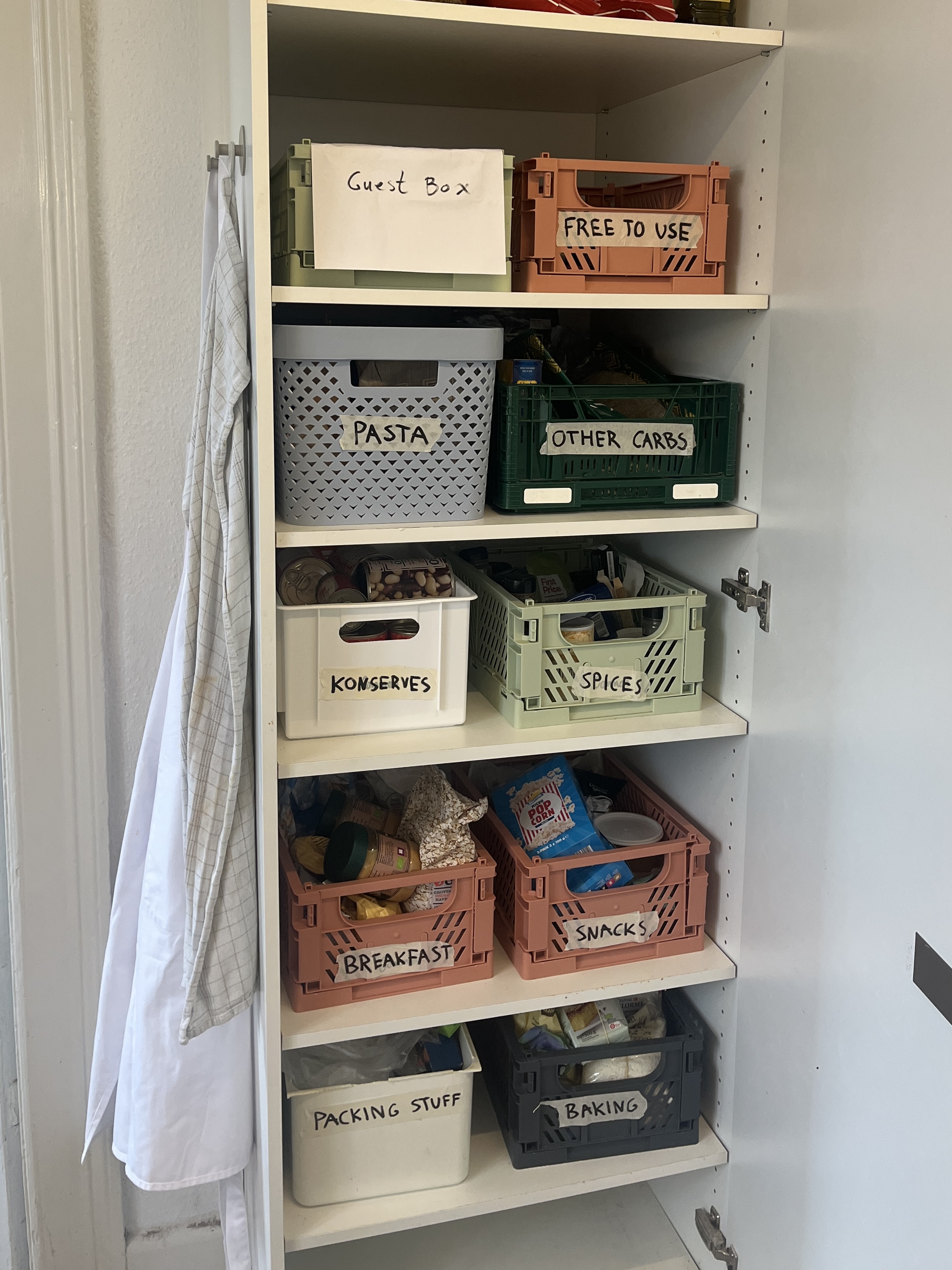 Who doesn't like labels? Picture by Mathilde Sif Eiby
At the station: Strummer Edwards, Johan Them Steffensen, Mathilde Sif Eiby, Anton Ræbild Jensen and Jakob Hansen
NON-STOP BIRDS
tirsdag 22. september 2026
Ringing: WHAT A DAY! As we couldn't ring yesterday, today was gonna be my (Mathilde's) first day ringing here, and the change in weather was promising some good numbers - and it did not disappoint!
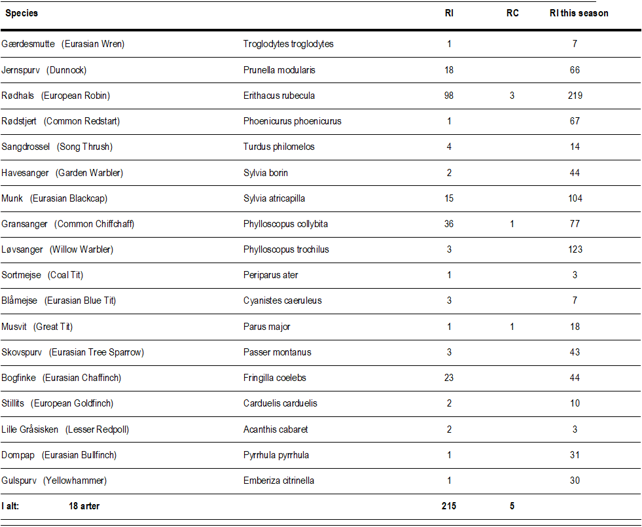
Already on the first round, we were almost overthrown with Robins (Rødhalse), and with a great effort from Bent doing rounds, and eventually Johan joining in after Obs, we managed to ring and recapture a total of 220 birds today. Both mine and Strummers highest number ever! It also means we almost doubled the station's total number of both Robin, Chiffchaff (Gransanger), and Chaffinch (Bogfinke) ringed this season - I've heard it's been a rather slow season so far though.
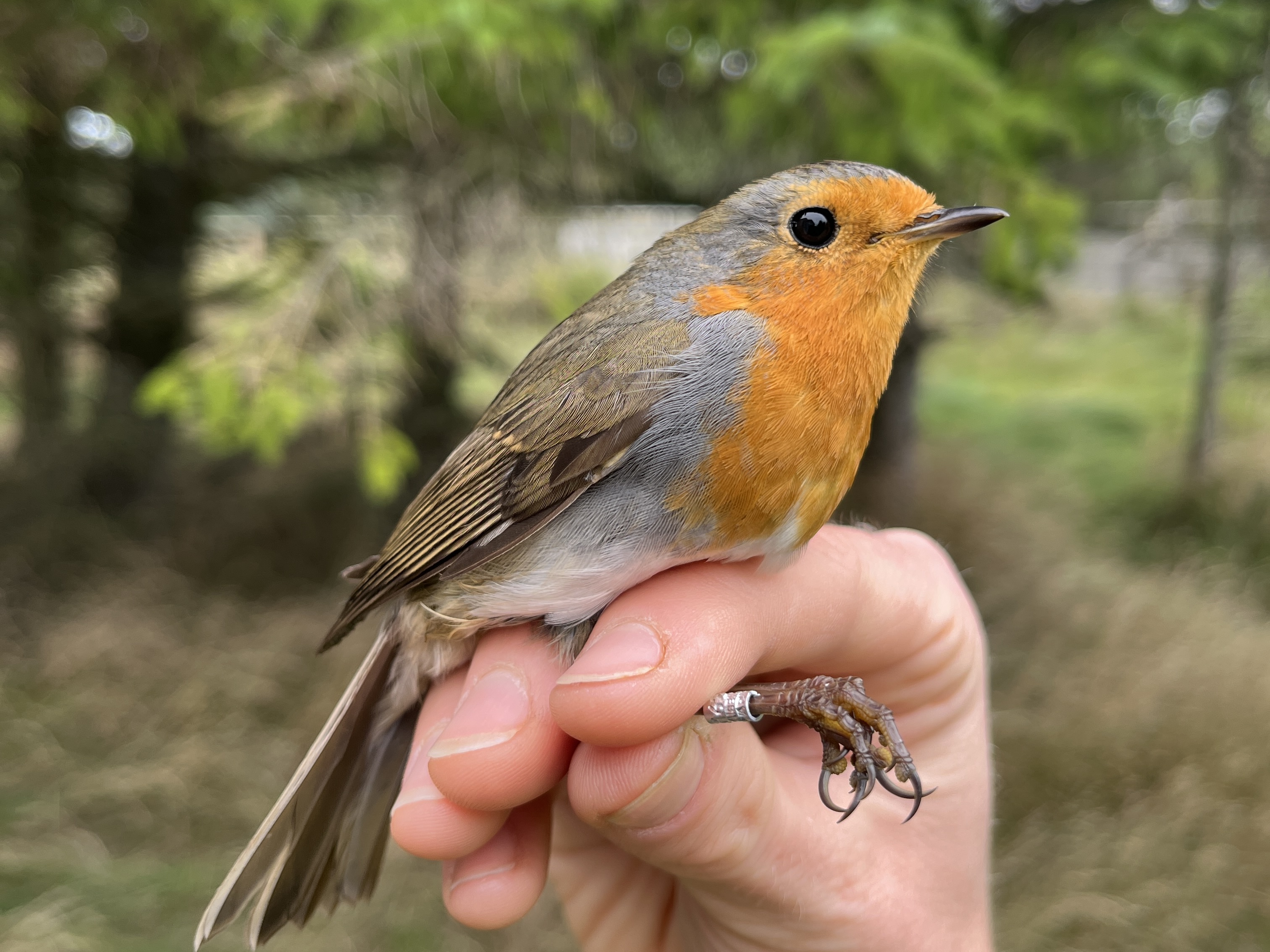 We had 100 Robins today! This one is a young bird born this season, aged from the light spots on the wing feathers called greater coverts. Picture by Mathilde Sif Eiby.
Since ringing in Gedser this spring, I've been so excited to get back at ringing, and today was just an incredible start. I even got four new ringing species! My first Coal Tit (Sortmejse), Tree Sparrow (Skovspurv), Redpoll (Gråsisken) and Bullfinch (Dompap) - I'm in heaven.
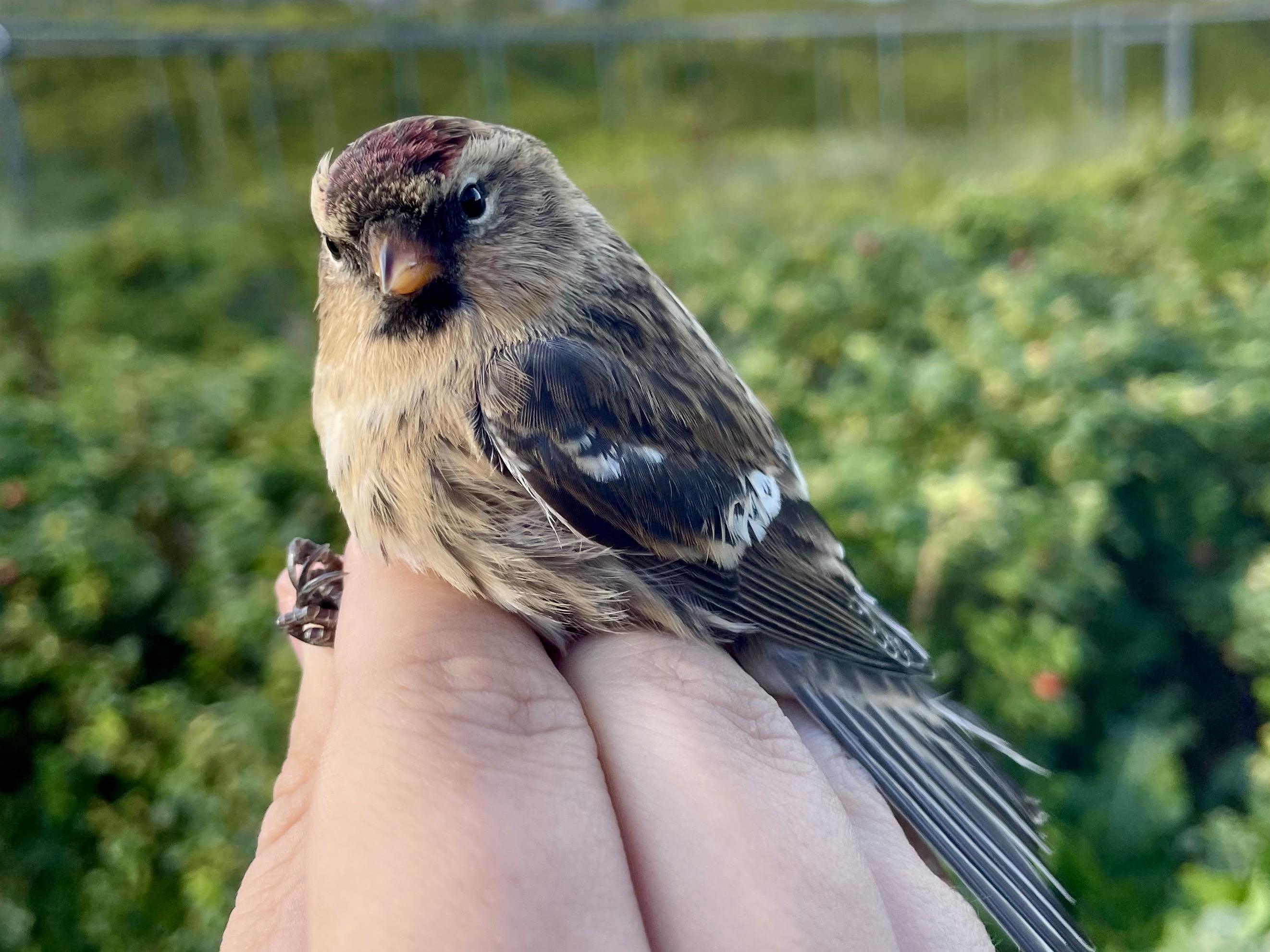 A beautiful Redpoll from today. Picture by Strummer Edwards.
Of the 18 species we had today, was represented both my favourite bird, the Yellowhammer (Gulspurv), as well as some cute pairings, including this pair of Blackcaps (Munk).
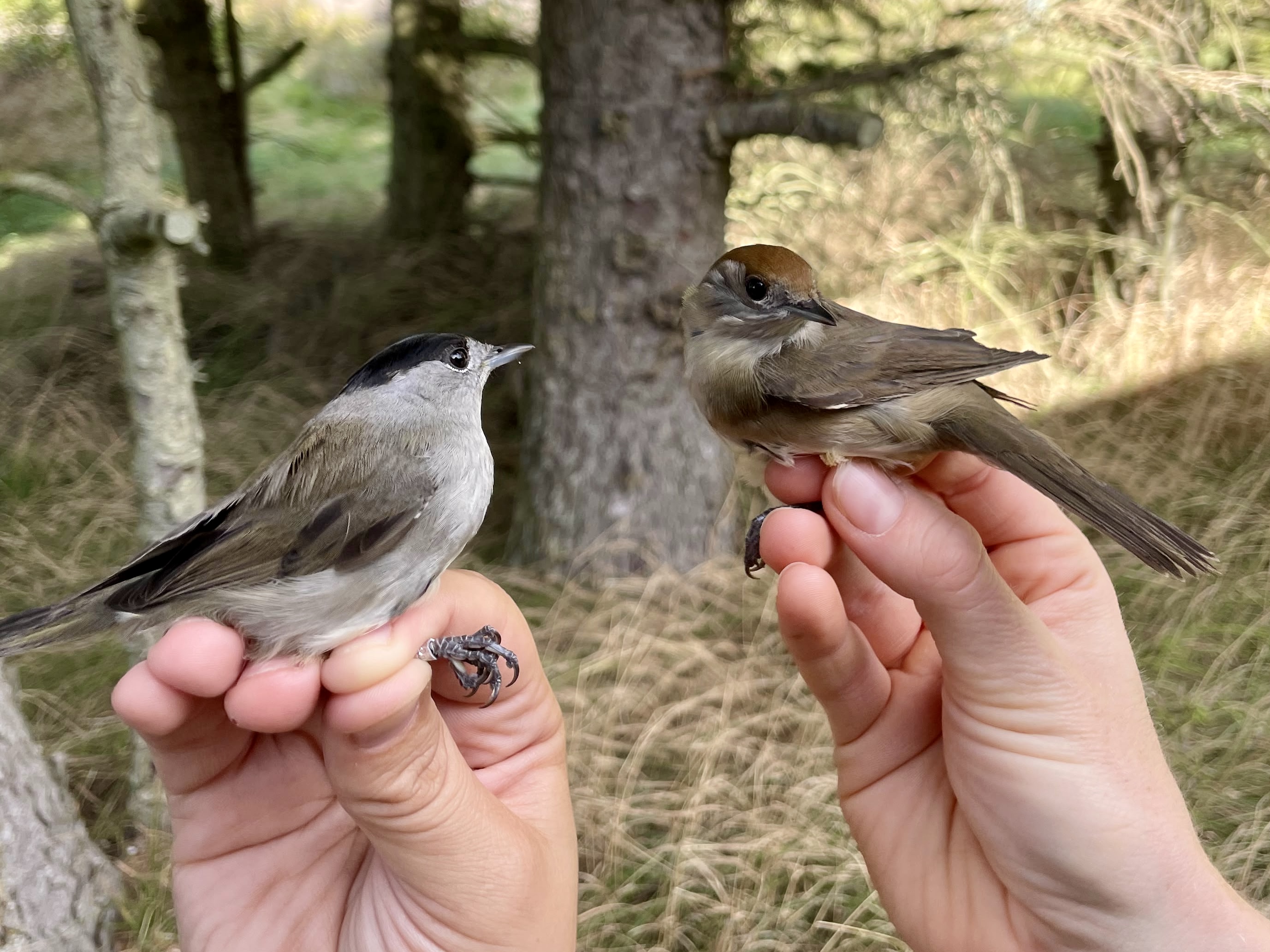 Two Blackcaps - the male with the black cap, the female with the brown. Picture by Strummer Edwards.
Today's numbers:
Other things: In other news, Anton arrived this afternoon, and to top off a great first day, and celebrate our new additions (Anton and me) to the team, we had dinner outside.
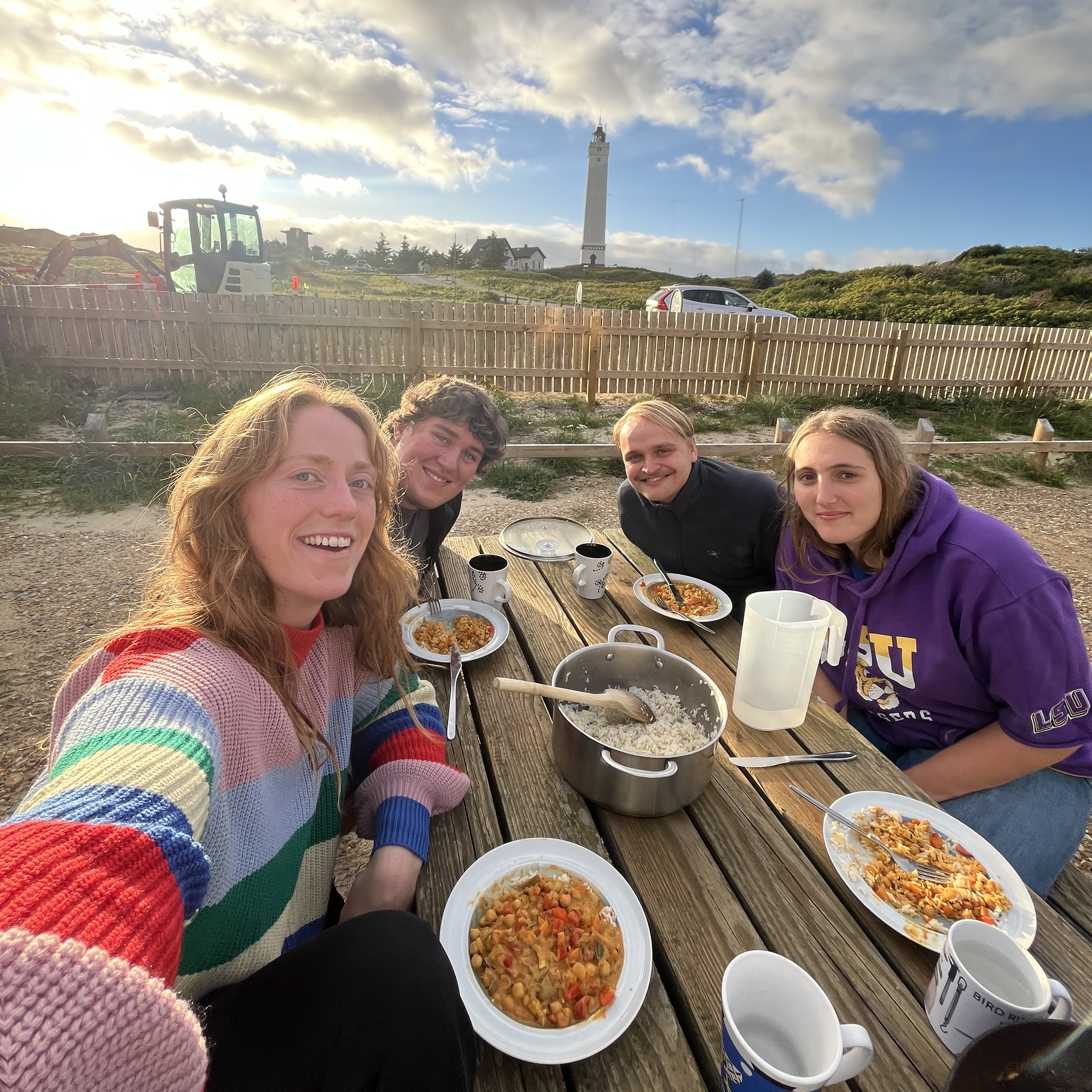 The current dream team! Picture by Mathilde Sif Eiby
At the station: Strummer Edwards, Johan Them Steffensen, Mathilde Sif Eiby, Anton Ræbild Jensen and Bent